

Life is about balance. We hear this all the time. But when Hanna du Plessis received her terminal diagnosis, this lesson took on a different weight. It was learning how to live fully while knowing she was dying.
Hanna, a South African-born artist, writer and social transformation facilitator now based in Pittsburgh, was diagnosed with bulbar-onset amyotrophic lateral sclerosis (ALS) in March 2023. Raised under the oppressive systems of apartheid, she grew up internalizing a strict sense of control, order and inherited power — realities she would spend much of her life actively unlearning. That commitment shaped her work, long before her diagnosis, as she led workshops and collegiate courses on design for social change, helping others confront the personal and systemic forces that divide us.
The diagnosis shook the foundation she had grown to love so deeply. It had been 14 years since Hanna arrived in the U.S., and she finally reached a place where she no longer felt like an “immigrant outsider.” Her passions could provide her with a life she loved. She felt free to travel with her family and explore new hobbies. Everything was starting to fall into place.
I cannot be dying. Not when I am only starting to live.
The illness moved quickly, stripping her of speech and movement. Just two years after her initial diagnosis, Hanna is quadriplegic and reliant on 24/7 care. Even as her body weakens, Hanna chooses to hold onto what matters most: a “stubborn joy,” trust in the moment and discipline to keep writing through it all.
What is the gap between my fear-filled projection and the wonder I am unable to imagine? I owe it to myself to see what happens.
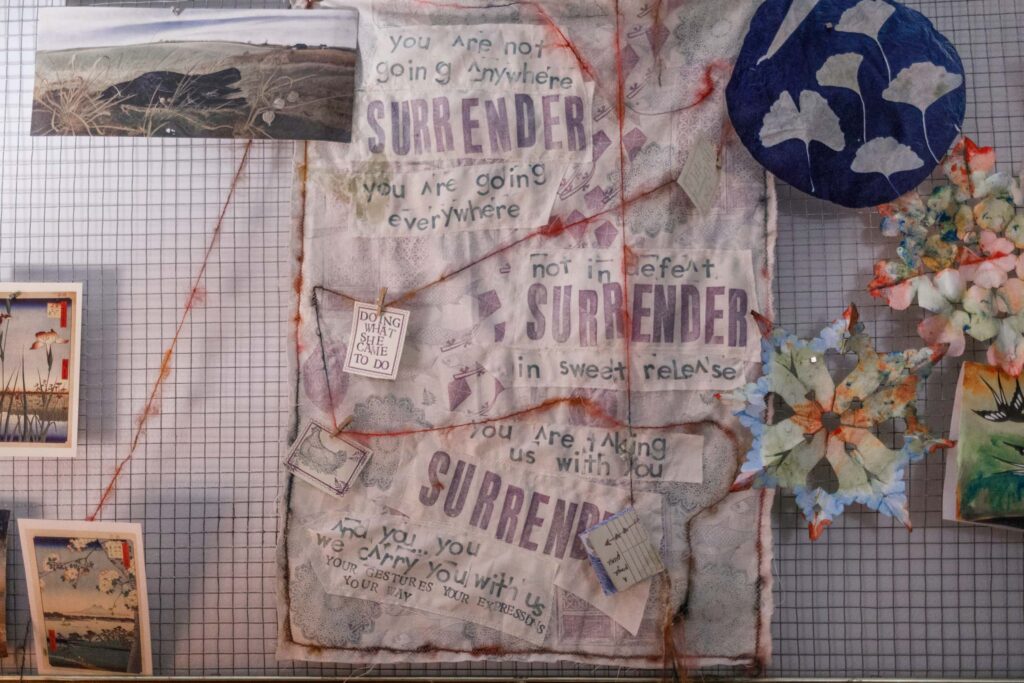
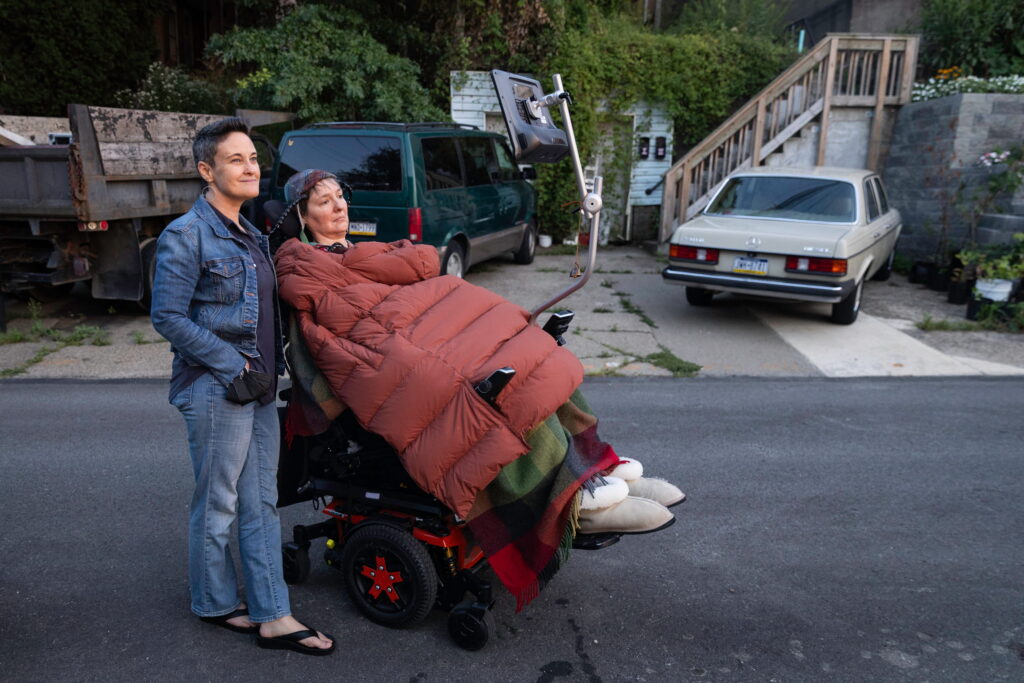
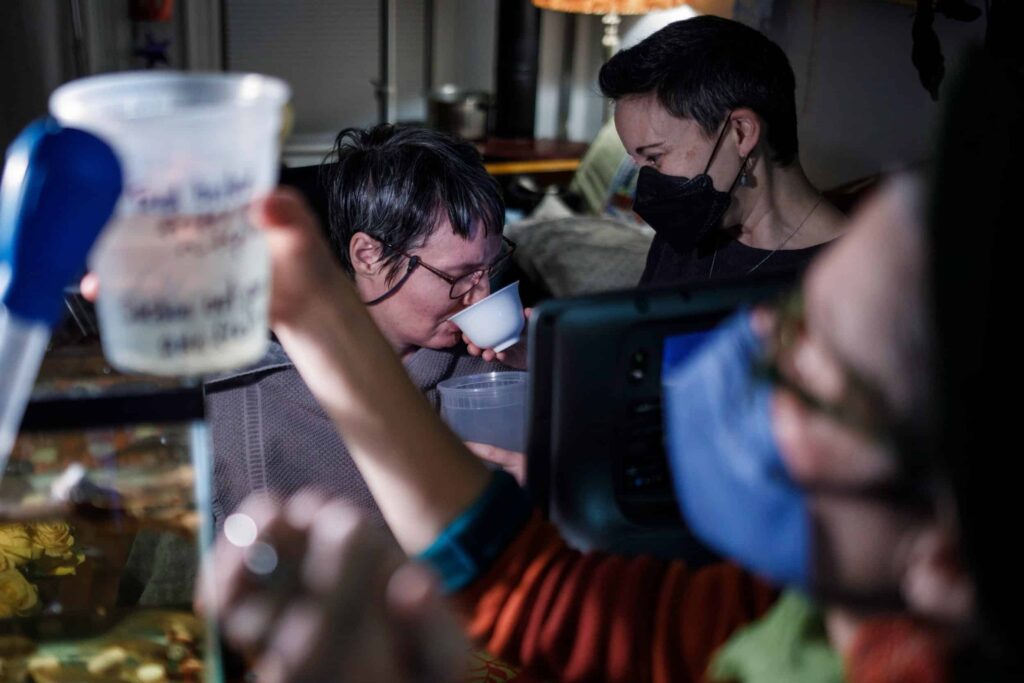
Using a Tobii eye-tracking device, she composes essays, journal entries and reflections, some featured in her powerful collection titled Bedsores and Bliss. Documenting her life from the beginning of diagnosis to present-day, her book offers readers a rare and radically honest glimpse into experiencing a terminal illness.
The book navigates everything from the mechanics of care to the varying periods of grief and longing. In each piece, Hanna helps reshape the narrative of life with a diagnosis, finding balance between joy and rage, surrender and autonomy, breaking stigmas along the way.
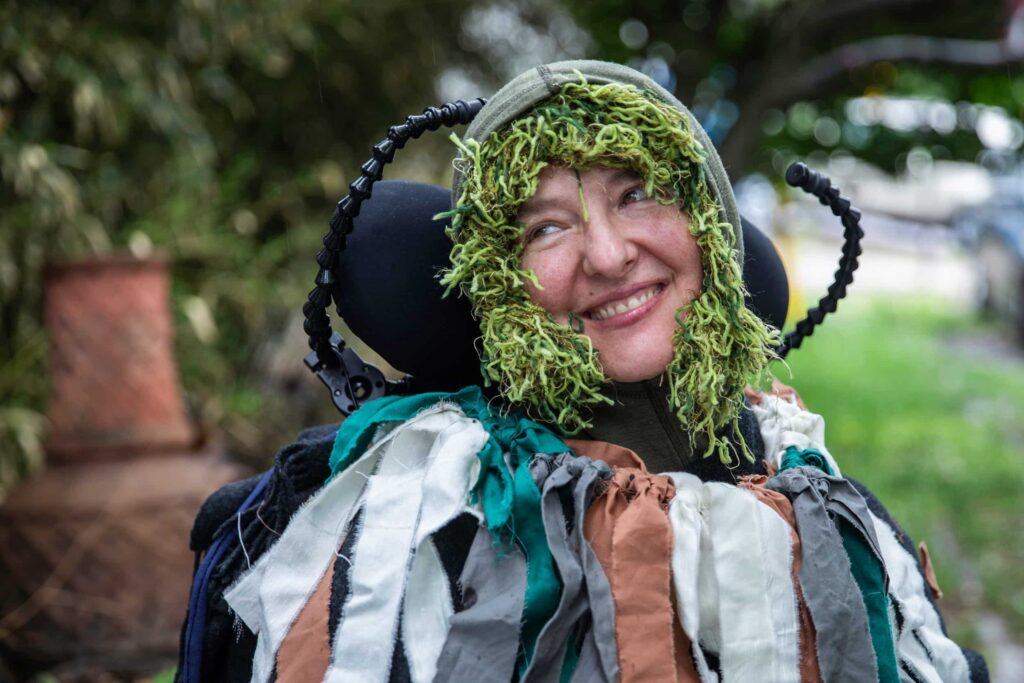
Despite all this and no makeup, I am still a beautiful badass and I am excited to be with and learn from you as we keep writing, shifting, breaking, righting and remaking ourselves and this world.
In November of last year, over 280 people gathered — in person, on Zoom and via livestream — to honor Hanna at her end of life celebration. Family, friends, colleagues and former students all joined, eager to celebrate her life, voice and the powerful community behind her. Hanna herself expressed, “One of the perks of being on the slow death safari is that you can attend your own funeral.”
The program beautifully honored Hanna’s presence and legacy while creating space to collectively hold grief. Deeply moved by the event, visual journalist Maranie Staab felt called to play a role in capturing Hanna’s legacy. The two first met years ago at a TEDx event where they were both speaking, but reconnected after the ceremony due to Maranie’s desire to capture her life.
“The celebration was just such a gorgeous day,” Maranie said. “I left there pretty moved, and my instinct was ‘this woman is incredible.’” She reached out to discuss potentially capturing photos, and Hanna eagerly welcomed her into her space.
This blossomed into a collaboration built on trust and a vision that pushes audiences to challenge the narrative of dying, rather than shy away from it. Their creations both explore the realities of 24/7 care and how to trust in what we do not understand.
“I love her. Every day, she makes a decision about how to show up in the world… to, even on her worst days, bring joy into a space. It is this conscious way of living — a high bar, in the most beautiful ways.”
At the heart of both Hanna’s writing and Maranie’s lens is the larger story of community.
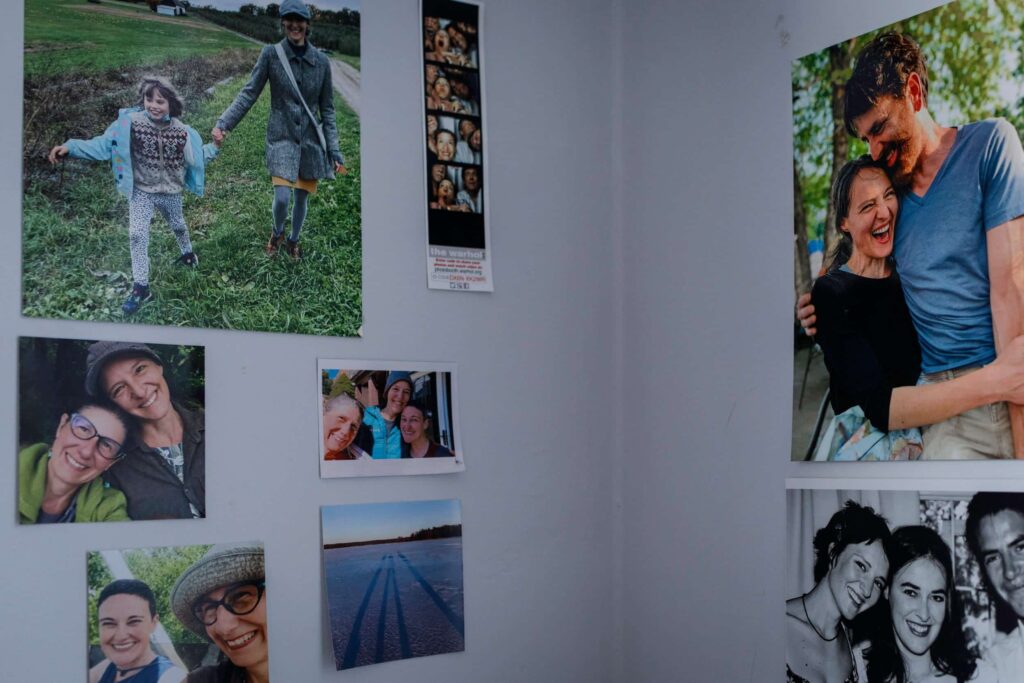
Hanna is surrounded by a group she calls the “CareForce” — a self-organized web of friends and chosen family who work tirelessly to foster an accessible home, raise funds for caregiving and provide companionship during this time. The writing and photos often return to this theme of interdependence, making visible the labor of care, the complexity of being cared for and the culture of reciprocity that emerges when reliant on around-the-clock care.
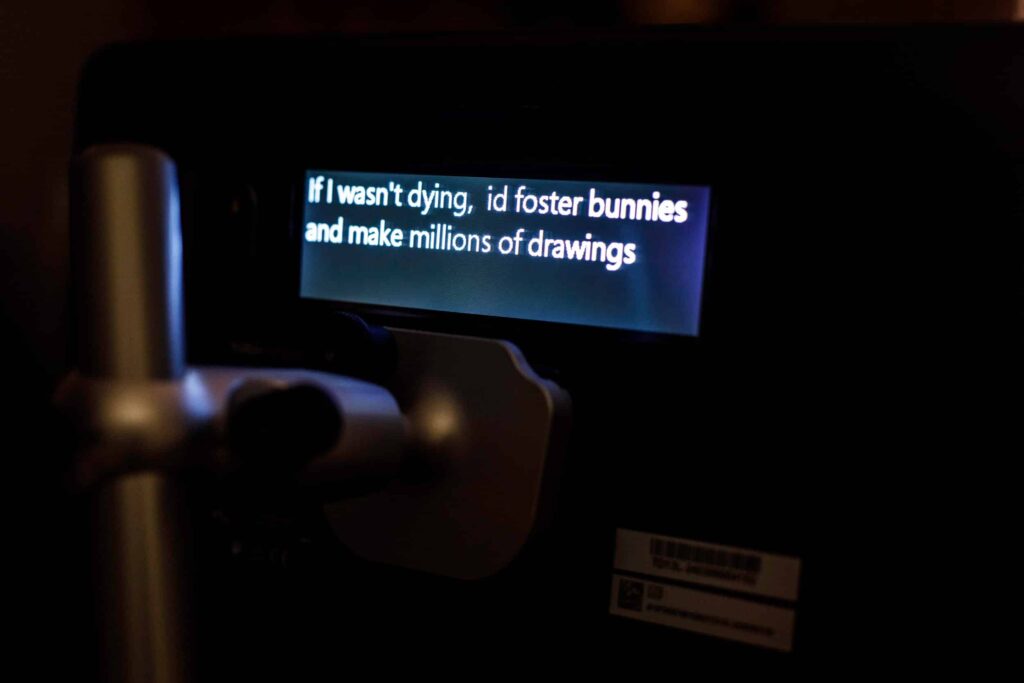
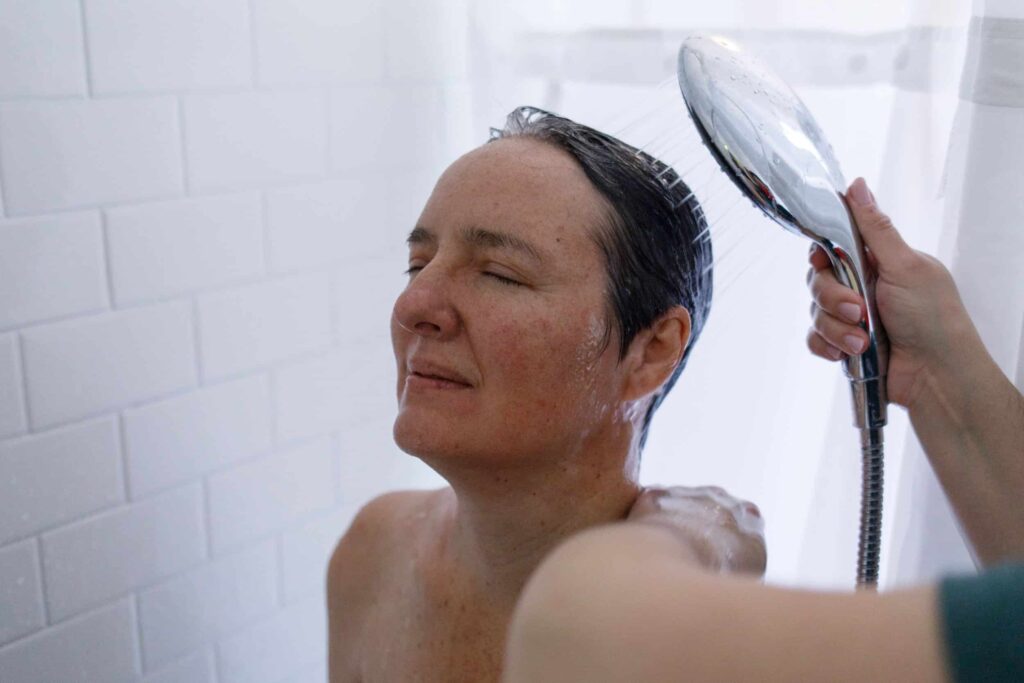
Because I rely on twenty (or more!) friends to help me, sometimes things really go wrong. When we have a botched transfer, I can feel (and sometimes sound) like a cat forced into a carry cage. It’s then that I practice interrupting my anger and anguish with the phrase, ‘This is what is happening now.’ … This community has been working towards a world more whole and just. So we are in practice to name and work through conflict. Sometimes we just need to come back to ourselves.
Among those helping to sustain this community is Marc Rettig, a close friend and early collaborator of many of Hanna’s design and teaching ventures. Together, they’ve spent over a decade developing tools for social transformation — long before her diagnosis. Marc has remained an anchor throughout her care journey, and a key part of the infrastructure behind the CareForce.
“There have been a small number of people who made infrastructure so that the loose organization had a kind of armature or trellis around which to organize,” Marc said. “We’ve built spreadsheets, calendars, systems — all improvised — that allow a group of volunteers to become functioning caregivers.”
This intentional structure has made it possible for Hanna to remain at home, surrounded by people who love her, despite the intense and ever-changing needs of late-stage ALS.
“We’re basically all nurses now, and none of us thought we’d be able to do that,” he explained. This strong network of care has prompted Marc and others to reflect on the rarity of such support — and how existing systems often fail those without a similar community around them.
“We ask, why is it that so many people go through this alone, or with just one or two others carrying the weight? We’re eight core people, with 20 more in the outer circle, and it’s still hard. We are worn out. So what is it about Hanna, or this dynamic, that sparked this continuing care? I don’t understand it fully.”
Maranie’s photography captures the texture and vulnerability of Hanna’s everyday life. And like Hanna’s words, the images reflect the ongoing inquiry into what it means to live inside a body that is dying, while continuing to create and connect.
“She wants to share this process of dying, this thing that we are all inevitably going to do and that is happening all around us and that we all think about — but nobody really talks about it,” Maranie said. “She’s allowing people in by peeling back those layers, and I think that’s courageous and necessary.”
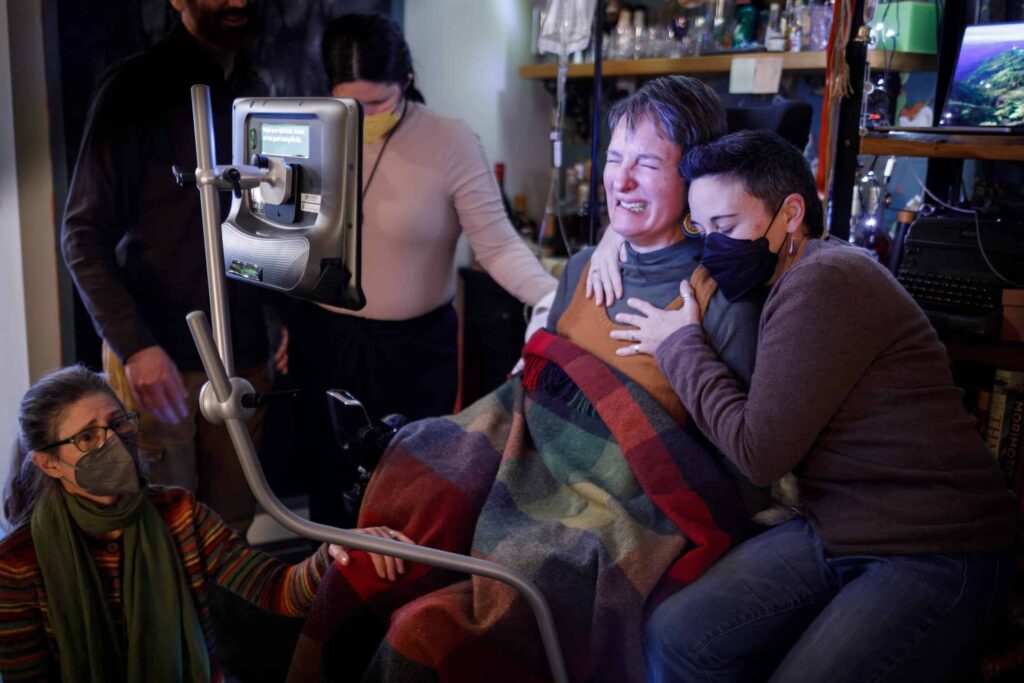
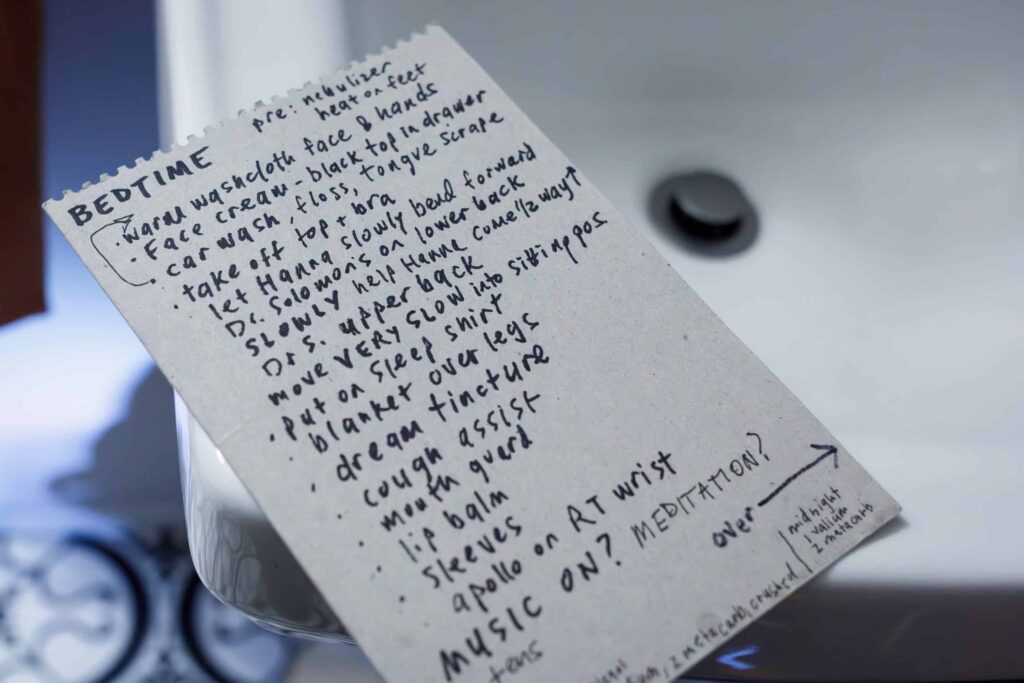
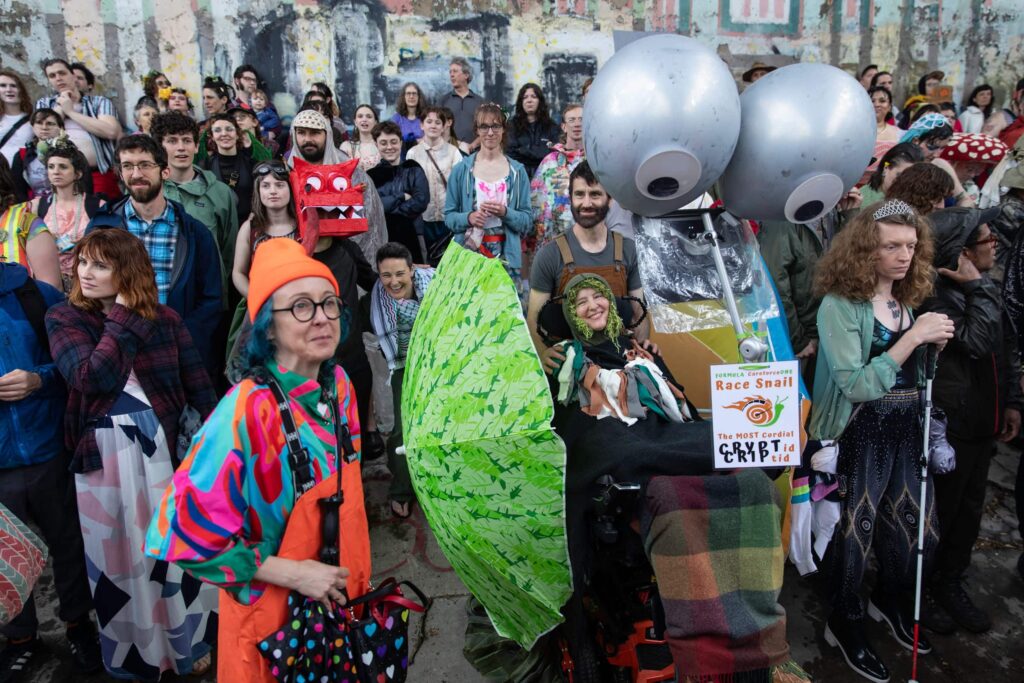
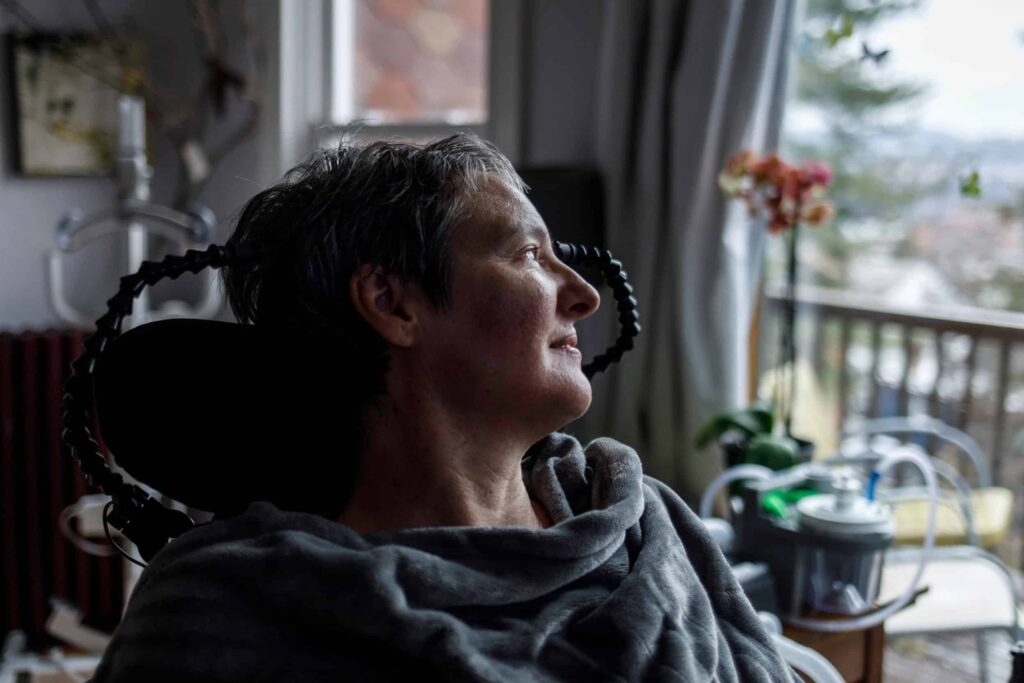
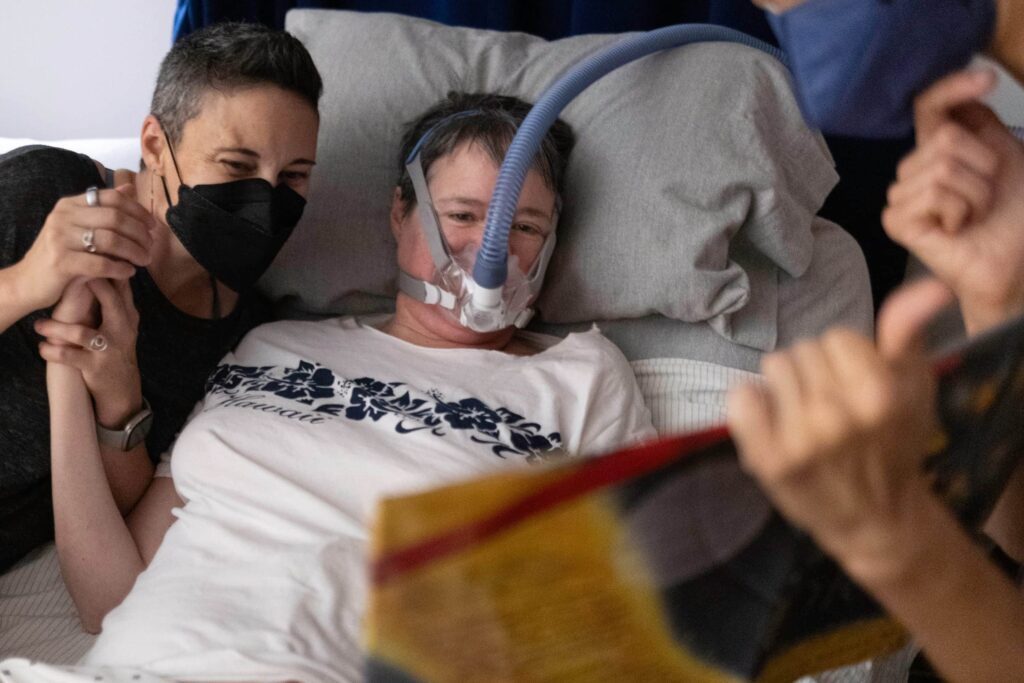
It’s not only my body that is dying. Think about so many other bodies — of people and places — you know it’s a time of dying. As Vanessa Machado de Oliveira says, it’s a time of “hospicing modernity.” Hospice like I’m giving someone a soft transition out of life. I believe it is our collective work to usher out this worldview of power-over, and bring in something more beautiful.
For Marc, one of Hanna’s lasting gifts is how she lives with creative, conscious intention — even in the last chapter of her life.
“There is a model to learn from, of what it looks like when someone engages with their own becoming as a creative act. It’s remarkably hard and anxiety-inducing, but she keeps going. She’s not avoiding the darkness — she’s turning to meet it.”
Marc said that the practice of “turning toward the shadow,” as Hanna often speaks about, has become a guiding principle for the whole community.
“We’re learning to hold shadow and meet it without it defining us, without it stealing the joy of life. To hold the joy of life and also be present with the darkest shadow — that increases our ability to feel everything. It makes all of life more vivid, more alive.”
Hanna closes her book detailing how she found her way through the darkness of diagnosis — orienting herself toward what she calls “stars.” Each one a guiding light and a resistance against despair.
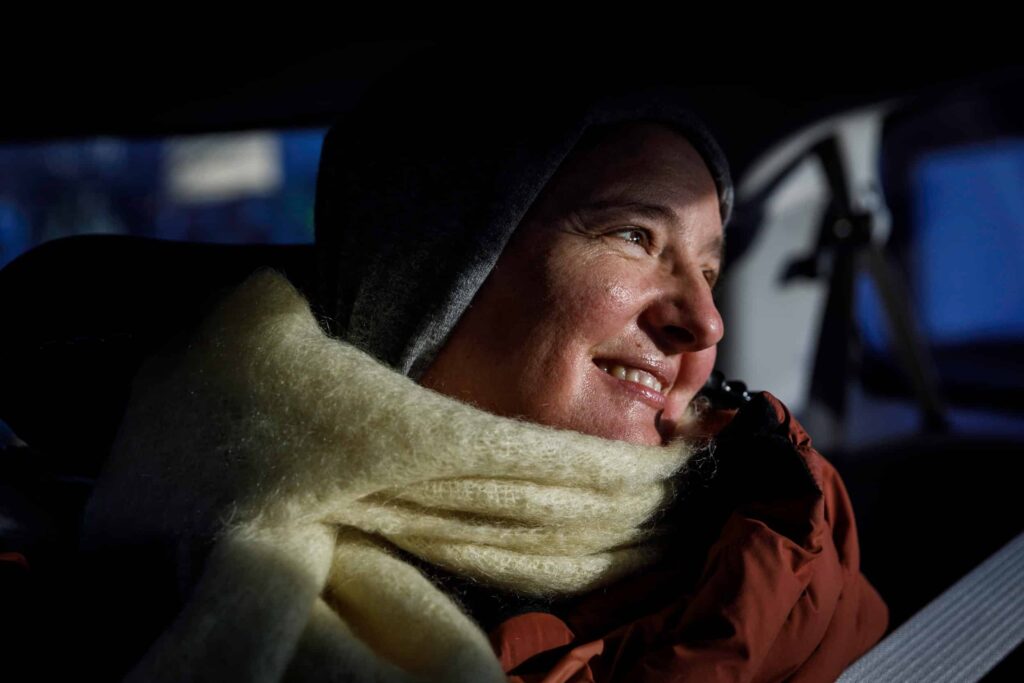
When my body slammed into the reality that I might have ALS, it was dark night and black waters all around. My familiar constellations were gone. My eyes darted around for wayfinders. I needed to build something to steer me through this crushing passage.
My first star
Do whatever it takes to come into agreement with reality, to play the hand you were dealt, despite your wish to chuck it in the blender and watch this deck of devastation disappearing into smoke.
My second star
Grieve with abandon all you are losing.
Pause, and when you’re ready, focus on what is possible.
My third star
I will use every ounce of agency available to me to respond to this boa constrictor with creativity and push more life into this world.
My fourth star
My most reliable source of wisdom is when I become quiet and open to the vast luminosity that some call God or the Spirit. What I find there still challenges me. It says quietly and is clearly as a traffic sign, trust this. I don’t know what to make of that intellectually, but my bones feel it. The words straighten my spine. I keep this close to my heart together with the prayer, please show me how.
Lean toward loving and trusting what is.
My fifth star
Stubborn joy.
Orient yourself the way migrating birds do towards the destination calling you. Now move, readjust course, move again, pause, feel for direction, find the magnetic pull and move again. Remember that you are not alone in the darkness. Trust in the help, both seen and unseen. You can make this journey. Home is waiting for you.
Featuring excerpt from “Bedsores and Bliss” & other writings by Hanna du Plessis
Photography by Maranie Rae Staab
Editor’s Note: Hanna Du Plessis, born January 17th, 1977, in Cape Town, South Africa, died in Pittsburgh, PA on February 1, 2026.
