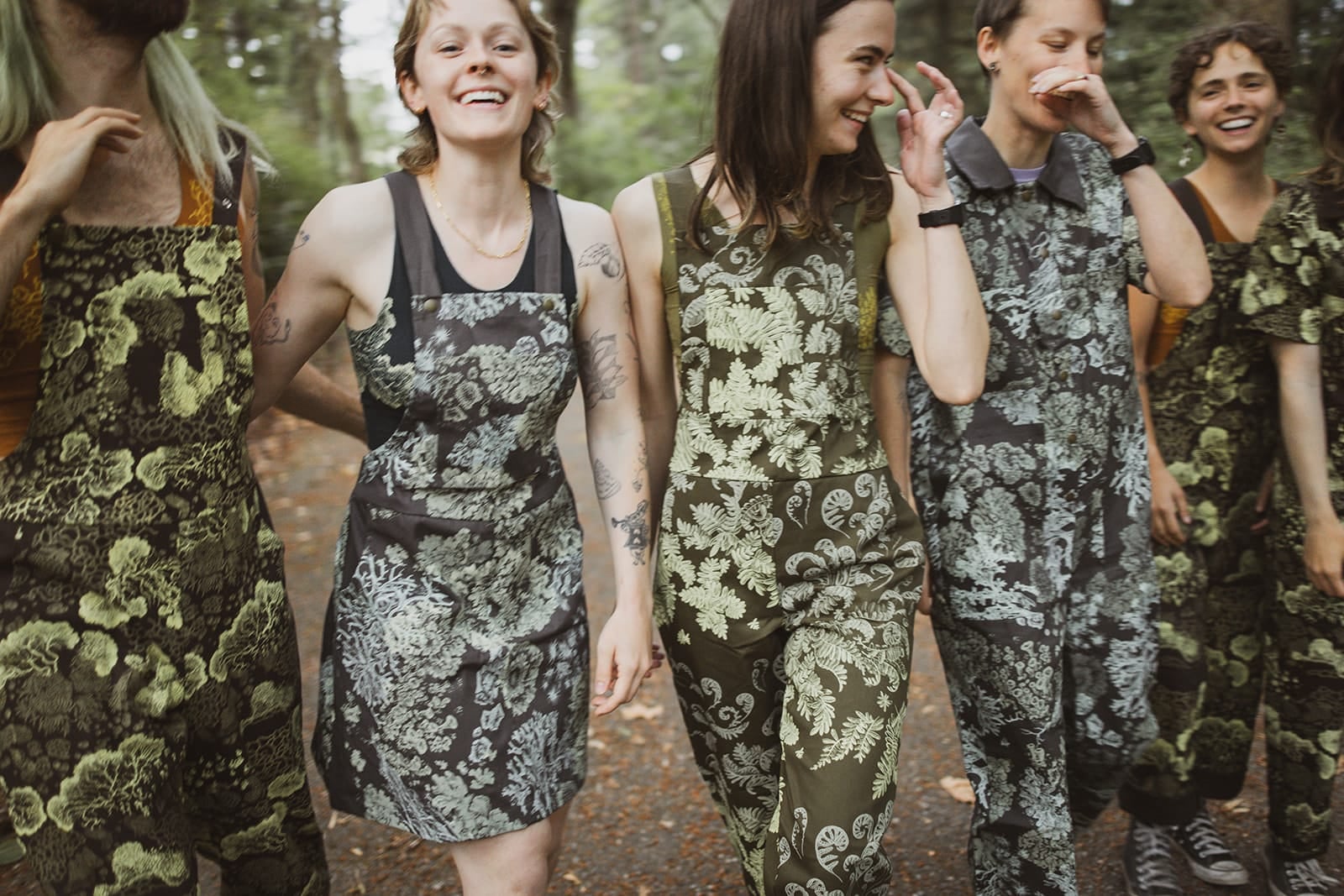


For artist Dayna Walton, nature is more than a source of inspiration — it’s a collaborator. From the delicate intricacies of slime molds and stoneflies to the understated beauty of lichens and liverworts, her collections celebrate the often-overlooked wonders of Appalachia and the Blue Ridge Mountains. Through her handmade apparel and printed textiles, she invites others to carry a piece of that wonder with them, weaving ecology into everyday life.
Dayna’s journey as an artist took root in Michigan, where she studied printmaking at Kendall College of Art and Design. It was there that she first explored screen printing, a process that would later become the foundation of her work. Her artistic path led her to Western North Carolina in 2019 through the Artist-in-Residence program at the Great Smoky Mountains National Park. The region’s diverse ecosystems and rich landscapes captivated her, shaping both her practice and her sense of place. Today, she works from her home studio outside of Asheville, NC, where she and her partner use silkscreens to transform her ink drawings into functional art.
Her pieces — clothing, paper goods and textiles — often feature native species familiar to avid hikers and naturalists. But beyond aesthetics, her work carries a mission: to highlight the beauty and importance of often-ignored species. “It’s made for nature nerds,” she said. “It is loud, busy and bright, made to make a statement, and start a dialogue about what makes a being beautiful and worthy of protection, because even slime molds and insects are important and deserve some love!”
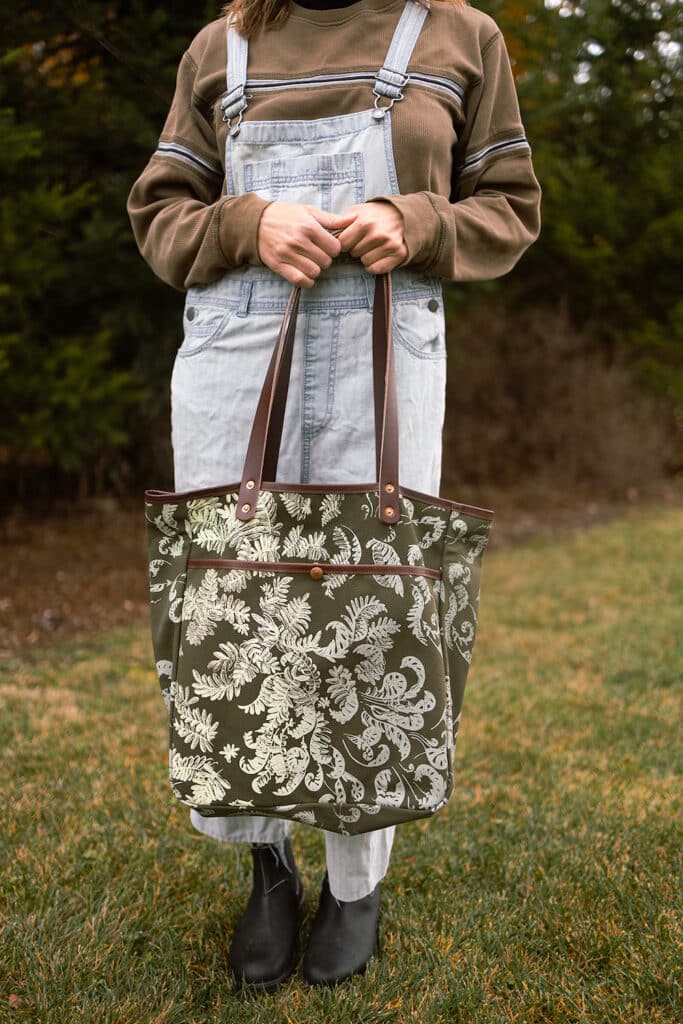

Dayna often collaborates with other craftspeople like sewers, dyers and leatherworkers to make unique, functional goods from printed textiles and paper, allowing her to bring her designs to life in ways she could not accomplish alone.
“Collaborating has helped me keep my scattered brain on track!” she said. “By working with other artisans, I can focus on designing and printing and keeping relationships with people I work with, and still offer awesome, quality pieces that I could never make by myself. These partnerships also help build community and bring more stability to both of our businesses.”
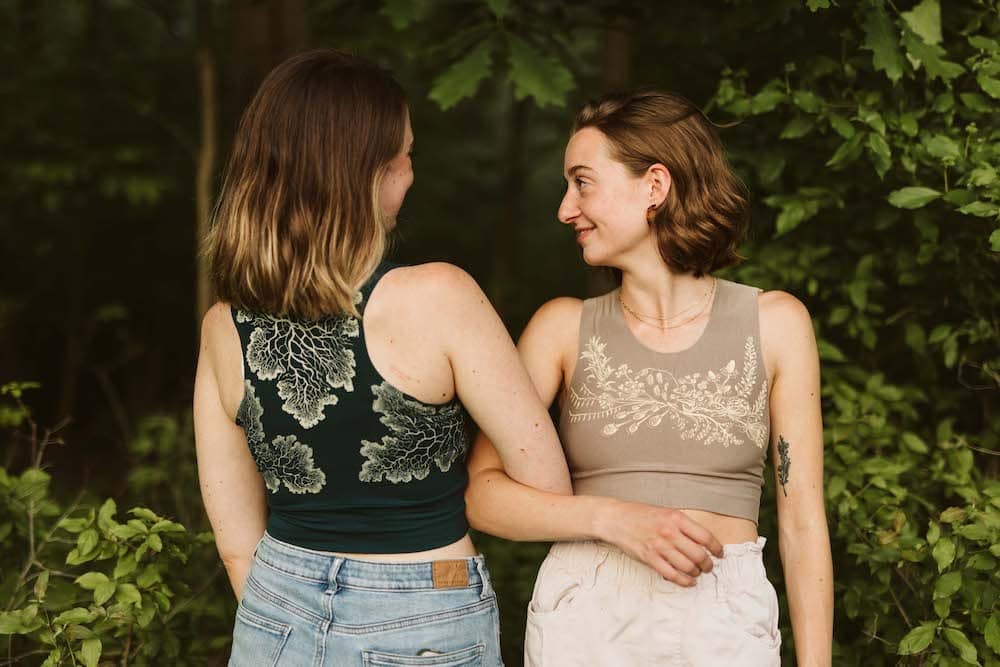
Dayna began playing with clothing as a teenager, making hand-painted, tie-dyed and sewn applique sweatshirts that she sold on Etsy to help pay for college. Creating apparel has been part of her art practice ever since.
“I love the way that people get to live in and with my work, it becomes a small part of them,” she said. “Creating wearable pieces will always be special to me because of their potential to bring people together who share a love for nature. I hope they bond over stories of bats and bugs.”
Dayna prioritizes sustainability by using repurposed clothing and natural fibers, as well as water-based inks, ensuring her materials align with the environmental themes of her art. “I am neurotic about using every scrap of material!”
She also remains deeply committed to accessibility in art. “I have leaned into screen printing over other printmaking techniques because of accessibility — it can be done beautifully and still be affordable!” she said, referencing the inspiration she draws from Bread and Puppet’s Cheap Art Philosophy, the manifesto of which hangs in her home. The Cheap Art Philosophy and movement originated with Bread and Puppet’s Peter Schumann in 1979 and espoused that art should not be reserved for the rich or exist only in museums, but that art needs to be everywhere and accessible to all. This dedication to affordability is why Dayna prioritizes markets and gift shops over traditional galleries, ensuring that her work is available to a broader and more diverse audience.


While Dayna’s work is rooted in connection and celebration, recent months have brought unexpected challenges that impacted some of those connections and offered little to celebrate. The devastating floods that swept through Western North Carolina in 2024 upended the region’s artist community. Dayna lost a significant portion of her inventory and retail footprint when her booth space at Marquee — a vibrant art and antique gallery — was severely damaged. “The loss of income from losing that space hit harder than the insane amount of inventory that floated away,” she said. “It was a huge part of my year, not just financially, but as a place where I could engage with the community.”
Despite the hardships, she has found resilience in the support of her fellow artists and the broader community. “It was special to get some of my Marquee pieces back. Several folks found things downstream and took the time to collect them and get them back to me,” she said. “Luckily, I still have my studio and have a lot of inventory there, so I am focusing on moving forward.”
Like so many artists in Western NC, Dayna lost not only inventory, but a month of events and income during what is usually the busiest time of the year for tourists due to stores that closed temporarily or permanently. “After this period of loss, we did have an amazing holiday season and really felt the support of folks spending with intention at events like Marshall Handmade and Big Crafty,” she said.
Along with a few of her fellow artist friends, Dayna opened Luna Gallery earlier this year in the recovering River Arts District. The co-op gallery space showcases the artwork of the four Asheville artists, giving them a dedicated space to sell their work while rebuilding the foundations for a thriving creative community.
The recovery process has been a testament to the strength and determination of the region’s artists. “Everyone is just trying their best,” Walton says. “For us, quitting isn’t an option. Art is part of our identity. We keep going — working in our living rooms instead of studios, traveling to sell work, whatever it takes.”
Dayna said the River Arts District group is doing amazing things, connecting artists to opportunities and hosting special recovery markets. “They have opened a gallery called the RAD Outpost in Downtown Asheville (which was unscathed) to help displaced artists get visibility.” New clusters of shops and studios are popping up in other parts of town as folks relocate and rebuild.
Markets and exhibitions have been emotional reunions, as artists share stories of loss, endurance and renewal. “When the markets came back, it was so emotional!” Dayna said. “If you asked someone how they’re doing, so many strangers’ stories fell out of their mouths, and tears from their eyes, demanding to be shared. Like they need someone to say, ‘It’s ok, me too, we are still here,’ enduring the dissonance of trying to go through the motions of everyday life in the debris.”
Looking ahead, Dayna is embracing a shift toward deeper, more intentional connections in both her art and business, inspired by those who are making huge, sometimes hard to understand shifts and simplifying. “I see a lot of folks embracing uncertainty instead of feeling like it’s a failure to close a shop or take a hiatus from something.”
Dayna is focusing on teaching classes, selling art at her town’s farmer’s market, and choosing to lean into real life interaction over being online. “I am inspired to find connections in real life and rely less on the internet and social media,” she said. “I hope Luna Gallery can make this happen for me, if even in a small way.”
While the flood was a devastating setback, Dayna is adjusting and adapting. She continues to find new ways to merge her art with her values, sustain her creative practice and uplift those around her. Her art will continue to reflect the beauty and resiliency of the region that is her home and source of inspiration.
You can find Dayna on Instagram @solsticehandmade and follow Luna Gallery @lunagalleryasheville.


