
Food and drink are a part of a region’s soul. Restaurants and bars are where people go to congregate, to voluntarily spend their own hard-earned money for a dish or glass that might expand their mind in some way. People seek out hospitality to feel taken care of during tough times or to celebrate in moments of gratitude and joy. Though I love cooking at home, there’s something about going out and seeing a curated vision of a menu that tells a story, or buying a bottle of wine and knowing that it didn’t just appear out of thin air but is part of a winemaker’s dream and vision.
Lately, our region has had an explosion of food and drink innovations. And in the last few years, Pittsburgh has experienced an influx of Central Asian immigration. Many rideshare and food delivery drivers in Pittsburgh come from Uzbekistan, Kazakhstan or other parts of Central Asia, like Russia’s Dagestan province. Once, in a rideshare during an intense rainstorm, a driver asked me what lightning was in English, saying he had started doing Lyft to practice his English.
2023 and 2024 were hot years for Uzbek cuisine in Pittsburgh: Chaykhana in the city’s West End, Piyola in Mt. Lebanon and House of Shish Kebabs in Spring Garden all opened within that time frame. Many of these places boast late hours so the rideshare drivers can fuel up, reminding me of one of my favorite spots in New York, Punjabi Deli, which was open until 4 a.m. to accommodate cab drivers (and drew in drunken twenty-somethings along the way).
One question that arises often in Rust Belt cities is what exactly there is to do past 11 p.m., if you’re not drinking.
Central Asian or Middle Eastern cafés and hookah lounges provide one option where you can sit around and socialize over a fragrant cup of Turkish coffee or cardamom tea.
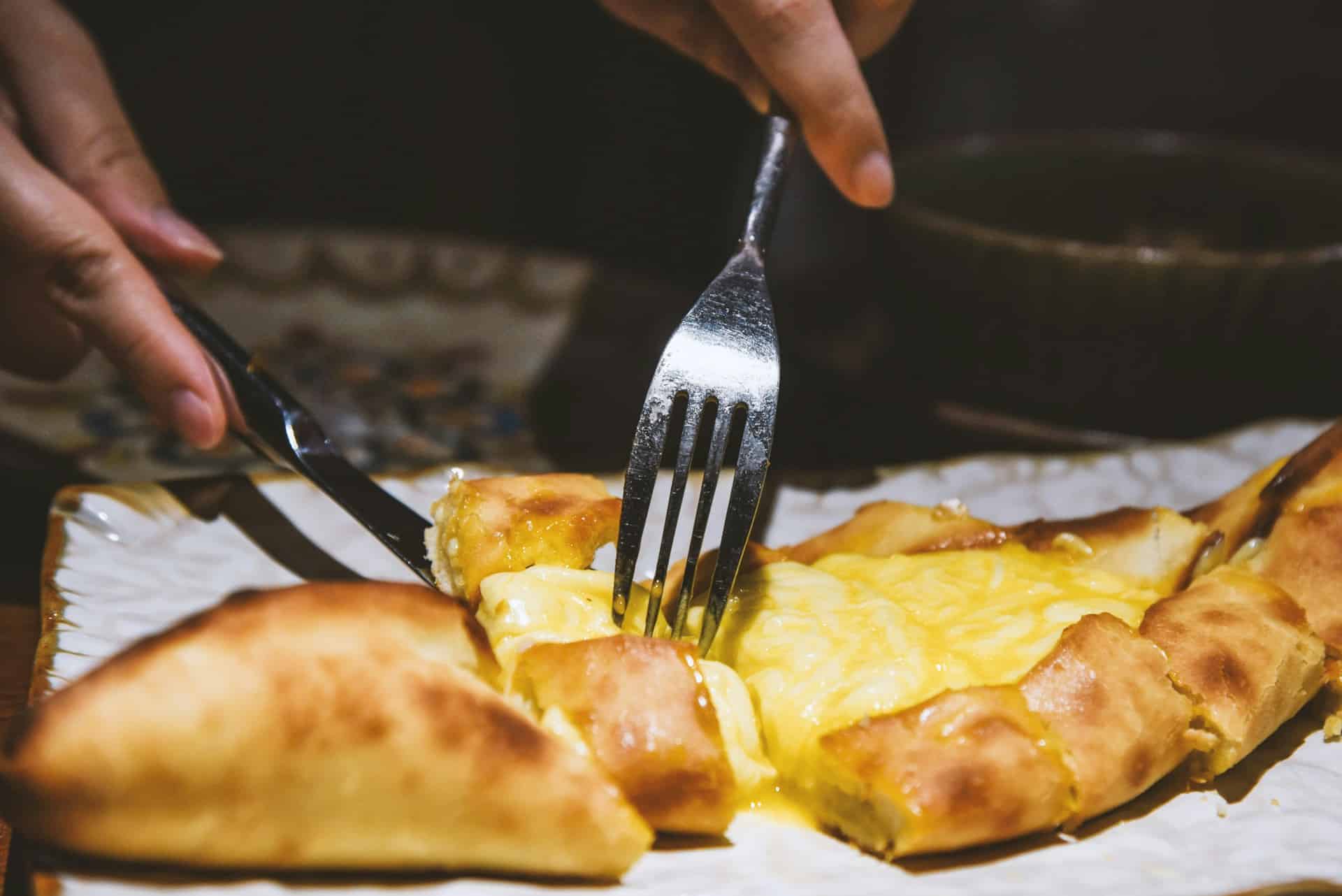
My favorite of the city’s Uzbek restaurants is Kavsar, in the dramatic hilltop neighborhood of Mt. Washington. You can sit inside to enjoy steaming bowls of borscht and mastava, a traditional Uzbek tomato soup with rice, their house-made Uzbek bread (the “small” is a misnomer) and an Uzbek take on Georgian khachapuri, the “cheese boat” of flatbread with an egg cracked inside of it. This flatbread is a small slice of heaven, advertised as an appetizer but suitable as a full meal. Central Asian cuisine is hearty to accommodate the cold, mountainous region it comes from, making it an ideal match for the grey, harsh weather of the Appalachians.
When people think of spirits in Appalachia, their first thought is moonshine and Kentucky bourbon, but there are a lot more options. In Pennsylvania, we are at the mercy of the state liquor board and can essentially only buy Pennsylvania-made liquors if we’re not shopping at the state store, Fine Wine & Good Spirits. I discovered a hidden gem at Pennsylvania Libations, one of the few non-state stores selling spirits: Eight Oaks Farm Distillery Barrel-Aged Applejack made in central Pennsylvania but sold all around the state.
I was on the hunt for brandy to make a batch of mulled wine, and the clerk at Pennsylvania Libations counseled me that while this brandy was not cheap, it would hold up well in a mulled wine recipe. I was delighted by how smooth it was while still retaining a full-bodied flavor. It’s aged two to three years and is 100% American. This brandy works very well as a mixer in citrus cocktails or hot cocktails or as a late-night digestif. Like Appalachia itself, the Eight Oaks brandy is complex but tough, holding its own whatever you pair it with.
While Appalachian mountain soil is ripe for growing grapes, one of the most prominent wine regions in Appalachia faced devastation last year. Asheville, NC, and the surrounding Western North Carolina region, part of the Blue Ridge AVA (American Viticulture Area) have a developed wine scene, spearheaded by the ultra-luxe Biltmore Estate right outside of Asheville. But many of the region’s urban wineries lost their entire businesses due to the catastrophic flooding of Hurricane Helene. This isn’t new in the world of wine, as Napa Valley also experienced raging wildfires in 2020 that culled a year’s harvest. But given that there was little viable harvest this past year, now is a great time to get into North Carolina wines and support what they do have on their shelves.
Addison Farms Vineyard in Leicester, NC, is still operational. They grow Chambourcin, a hybrid-grape more popular in the Mid-Atlantic than the West Coast. Addison Vineyard’s 2022 “Lineage” Chambourcin boasts a palate of cherry cola, ripe strawberry and fennel, and they suggest pairing it with something spicier. Stone Ashe Vineyards has a classic 2022 Cabernet Sauvignon if you’re looking to branch out from California Cabernets, which has notes of graphite and dried herbs beyond the typical palate of bright black fruit and black pepper. There seems to be more of an herbaceous, earthy, stone fruit flavor in a lot of North Carolina wines, as the soil is a bit harsher and gets more rain than the West Coast wine regions.
Nothing is more intimate and meaningful than what you put into your body. So let eating and drinking be one more way to foster a deeper connection to Appalachia and the community around you.
