

Christianity has dominated Appalachia since the 18th century following the immigration of Scottish and Irish Presbyterians, New England Baptists and German Mennonites and Amish.
Most notably, Appalachia thrived on more than established churches, and frequently had independent places of worship, focusing on individual spiritual needs rather than a strict following of religious text.
The Vanishing Church by Ryan Purge explains how as the political divide between America increases, it also does religiously. Christian churches are becoming less moderate, leaving little space for LGBTQ+ and other marginalized groups to feel safe.
As a region known for community-building and trust, Christian churches here have made strides to open their arms to these groups, despite pushback from traditionalists.
The Bridgewater Church of the Brethren at 420 College View Drive, Bridgewater, VA, was founded in 1878 with high values on human relationships, according to Pastor for Christian Education and Spiritual Foundation Erin Reinecka.
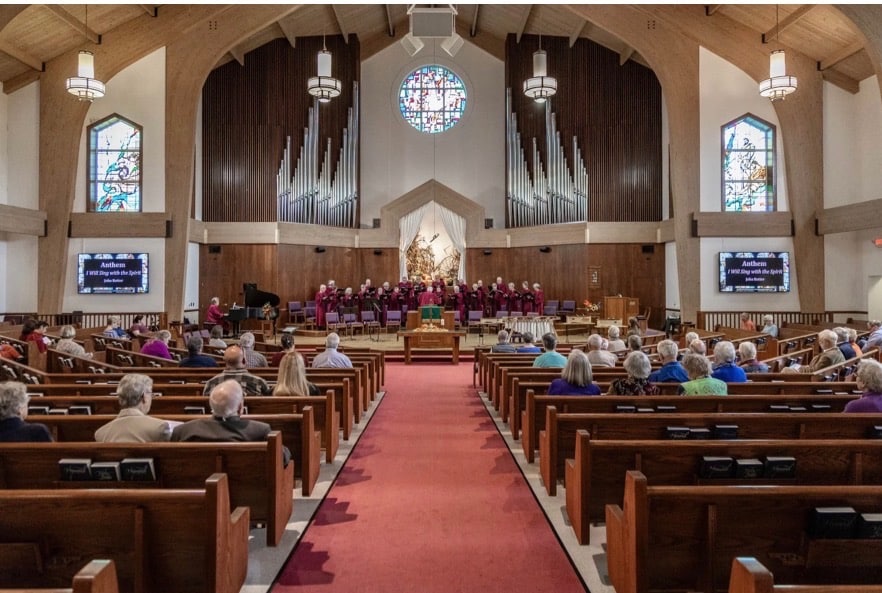
Along with Pastor for Worship and Administration David Miller and Pastor for Pastoral Care and Outreach Jennifer Scarr, the group has a shared commitment to peace, simple living and service. David described the church’s Pietist traditions similar to a Mennonite or Moravian, yet evolutionary with the community it serves at the time.
“We’ve certainly come into contact with so many more Christians of different backgrounds, and our churches are no longer derived from certain families,” Erin said. “We used to practice plain dress, like some older, border Mennonites still do, and that’s something that evolved over time. We don’t practice it anymore, but we still try to hold on to what was important about that value: the simplicity, the not conforming to the world just because the world does something.”
Jennifer said that she feels the denomination itself wouldn’t be considered progressive, but as a congregation, the Bridgewater Church of the Brethren is moderate to left-leaning.
“Our denomination gives us guidelines to mark and consider and have conversations about, but ultimately our final authority, it seems, is in the congregation,” she said.
One of those final decisions includes the extension of baptismal, worship and marriages for members of the LGBTQ+ community.
“The Church of the Brethren is organized according to geographical districts, and so, we had, like, 100 congregations that were in one district, would be like a diocese or something. If we were to look at the churches in that district…only one of those would say we’re willing to publicly announce that we’re going to conduct same-sex weddings,” David said. “That’s this congregation.”
The Bridgewater location made the decision in 2015, according to David. Despite intense pushback from neighboring churches, the Bridgewater congregation stands firm on their beliefs.
“I approach it as, people are made in the image of God, and this bestows a certain dignity on every person, and I also believe that if people feel the desire to make a promise to another person to live together, to love them, to stand by them, that is one of the most awesome things a person can do in life,” he said. “To say that only men and women can make those promises to each other deprives a whole class of people from the right to make those lifelong, public, church-based promises with one another.”
More information can be found at the church’s website, where services can be livestreamed every Sunday at 11 a.m.
The First Presbyterian Church at 456 Spruce St. in Morgantown, WV is also one of the region’s oldest at over 235 years old. Reverend Zac Morgan said the church has always been “a little rebellious,” tracing its lineage to the original Scottish and Irish Presbyterians who escaped English, religious purgatory.
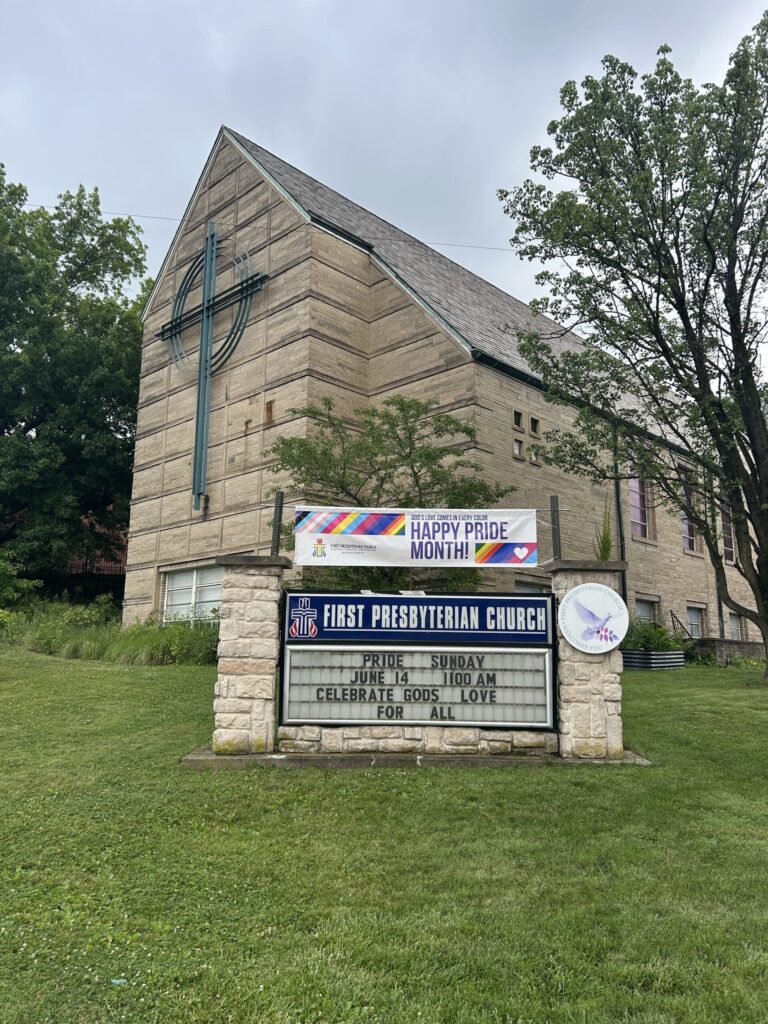
Zac said the denomination first felt the push to be “open and affirming” to the LGBTQ+ community in the early to mid-1970s, and the church’s bylaws to ordain and install LGBTQ+ leadership officially changed approximately 15 years ago.
Zac said he reacts to public backlash with redirection.
“I’m happy to be public and for a lot of those things to get directed at me rather than our church,” he said. “We’ve had vandalism, hateful Facebook comments. We’ve had people show up on Sunday mornings with the bullhorns, telling people who are walking into church that they were cursed by God.”
Zac is grateful for the community’s protection and the support the First Presbyterian receives daily. He remains motivated to preach by listening to God’s calling for the congregation and to create a safe space for those who have experienced religious trauma.
“This is a place where people who have had those [traumatic] experiences can come and talk about them, be honest with them, and have a place that’s open and welcoming and non-judgemental to build their faith back up. We need communities like that because, quite frankly, not every church is good at being open to people’s questions and exploring and wrestling with every honest dimension of themselves. That’s what we really strive to do,” Zac said.
More information can be found at the church’s website.
The Asheville First Congregational United Church of Christ founded the church approximately 100 years ago, according to temp pastor Bruce Schoup. The physical congregation has moved several times to adhere to the center hub of Asheville’s social scene, Bruce said, but the location is now at 20 Oak Street, NC.
The UCC is run by a covenant, but each church sets its individual policies. For the Asheville UCC, the congregation is proudly open and affirming, inviting “every race, nationality, age, gender, gender identity, sexual orientation, marital status, ability, financial means, ethnic and spiritual background into the full life and ministry of this congregation,” according to the church website.
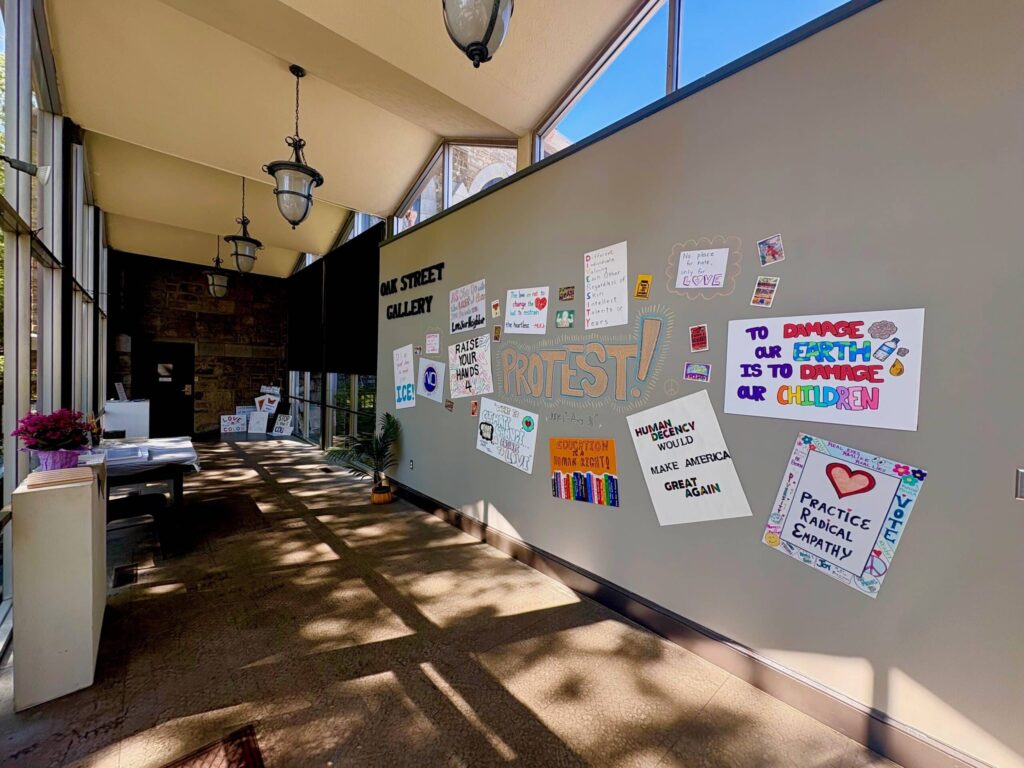
Bruce is proud to be a part of not only his congregation, but his historically accepting religion entirely.
“If you go back with the United Church of Christ, we were among the first to ordain an openly gay person. We were at the front line of celebrating same-sex marriage. We have always been part of peace and justice as a denomination,” Bruce said.
Despite travelling internationally, Bruce said he’s never seen an affirming and “upbeat” place as Asheville. He wanted to preach to teach others about God, rather than give a history lesson.
“I wanted to be able to talk about an open, progressive, loving and accepting God,” Bruce said. “I wanted to be able to talk about sacred text in its historic and literary context and not do this make believe, pretend that every work is a literal word of God. There are places that do this. They clash. The word in Christianity isn’t sacred text, surprisingly, it’s Jesus of Nazareth, but so many Christians twist that, and they turn Jesus into someone he’s not. They turn him into someone who doesn’t want you to say anything about your political values or justice issues, despite the fact that Rome killed him for a reason…he was speaking up for people.”
Reverend Andrew Hoots, the children and youth ministry coordinator at UCC Asheville, worked in several Baptist churches but felt called to this congregation for its strong stance on social justice issues. He said he wanted to belong to a church he felt welcomed all types of life.
“We welcome all, no matter what, because that’s exactly how Jesus taught his disciples,” Andrew said. “He never turned anyone away, and that has been something I’ve craved from a very young age being taught in Sunday school that Jesus loves all. Okay, then why are we telling gay people or people who think differently from us that they’re wrong or that Jesus doesn’t love them or they don’t belong in God’s family? That has never made sense to me.”
Bruce explained that your sexual orientation isn’t a priority at this congregation nor a concern of others here.
“There are people I don’t know what their identity or orientation is, and it doesn’t matter,” Bruce said. “What we want is for people to feel affirmed and loved and cared for, and if it comes up in a conversation…okay, that’s who you are. We want you to know that you are good, that you’re loved, that God loves you, and that it’s not as black and white as some people try to make it out to be.”
More information can be found at the church’s website. A map of open and affirming churches can be found at bit.ly/4vOO7PF.
