

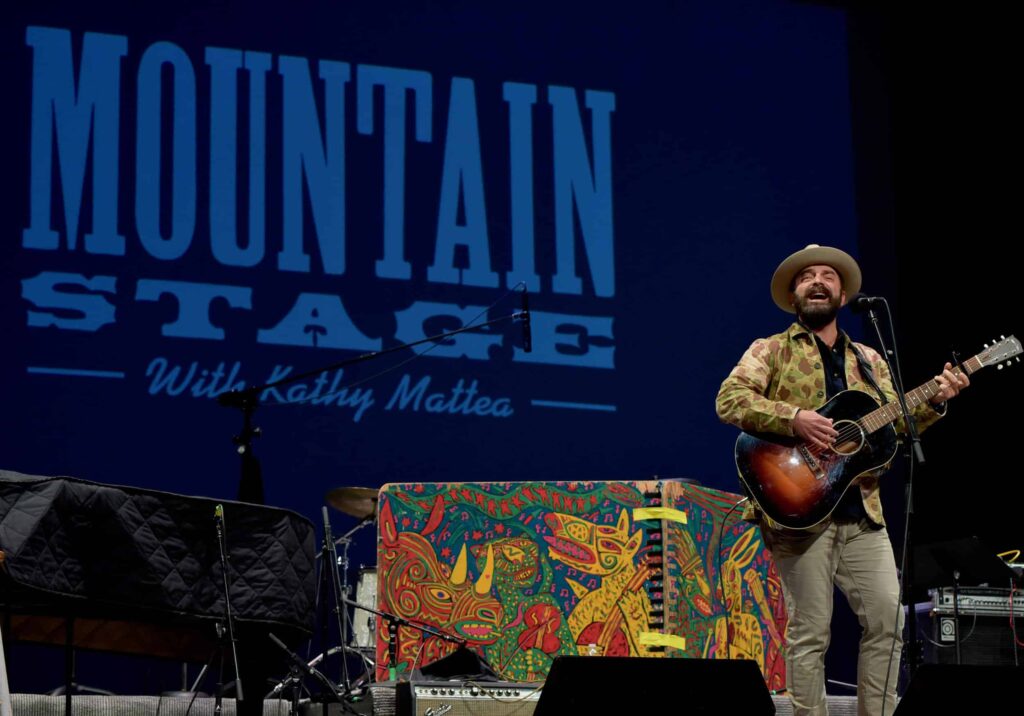
When the music of Mountain Stage echoes through the Culture Center in Charleston, WV, a door opens, inviting in generations of song, story and shared belonging. For over 40 years, Mountain Stage has been a space where legends and newcomers share the mic, where Appalachian hospitality meets global sounds and where the power of public radio proves its enduring worth.
But today, that power — and the cultural lifeline it represents — is at risk. Amid growing political tensions over public media, Mountain Stage, like many public broadcasting programs, faces an uncertain future. In early May, President Trump signed Executive Order 14290, directing the Corporation for Public Broadcasting and other federal agencies to halt funding to NPR and PBS, citing allegations of political bias. Although the order’s legality is under review, its ripple effects are already being felt in places like West Virginia, where the West Virginia Humanities Council recently suspended grantmaking due to a sudden drop in federal support.
Mountain Stage, produced by West Virginia Public Broadcasting and distributed nationally by NPR, has showcased over 2,000 performances since its inception. With previous guests like Brandi Carlile, Tyler Childers, Sierra Ferrell and John Prine, it’s become a pillar of the Appalachian cultural and artistic scene. Singer-songwriter and longtime host Kathy Mattea reflected on the magic and legacy of the beloved live radio program rooted in the heart of Appalachia.
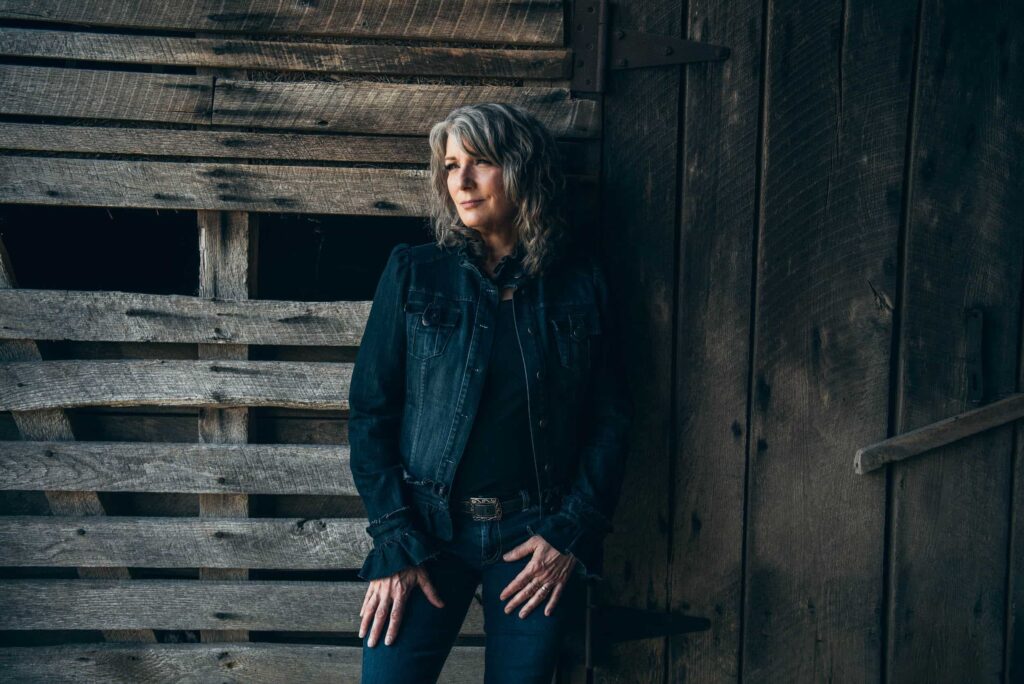
“Mountain Stage started in 1983, and I had moved to Nashville in the late ’70s,” Kathy recalled in a recent interview. “I signed my record deal in 1983. So for me, the arc of my career is the same as the arc of Mountain Stage’s existence. As Mountain Stage got bigger, I got bigger. And as I got bigger, Mountain Stage got bigger.”
Kathy’s words underscore just how intertwined the program is with her own artistic journey and the lives of countless other musicians. Founded in Charleston, Mountain Stage was created to amplify diverse musical voices from across the country, with a special emphasis on Appalachian talent. Hosted by Larry Groce for decades and now helmed by Kathy, the program has been an essential cultural export for a state often misrepresented in mainstream narratives.
And its resonance is national: the show’s latest compilation album hit #1 on the Alternative Country Specialty Chart, #6 on Billboard’s Compilation Album Chart and #30 on the Americana Music Association Albums Chart. Mountain Stage isn’t just a regional gem — it’s a nationally recognized cultural institution.
“We say ‘live performance radio,’ and it is about that special connection when someone’s performing live with an audience,” Kathy said. “It’s those invisible threads of connection that happen when someone stands in a room and plays music with and for other people. That’s the magic of Mountain Stage.”
More than just a musical performance, this magic is about community. Backstage, artists gather over food, share stories and even join impromptu jam sessions after the show at Charleston’s iconic Empty Glass bar. “There are chairs provided on the side of the stage and a monitor of the house so that all the bands sit and listen to each other,” Kathy shared. “One of my favorite moments was when one of the other artists, who was a songwriter playing solo, was videotaping on his phone. The band onstage was doing his song, and there’s lots of connections like that that are encouraged by the warm atmosphere backstage.”
Beyond its haven for musicians, Mountain Stage is also a cultural beacon for rural communities. “There’s a slot held on the program for local West Virginia-based artists,” Kathy said.
“It keeps the roots of Appalachian music — steeped in the hills and still living in the nooks and crannies of the hollers — alive.”
Now, those roots face a new kind of threat: uncertainty surrounding public arts and humanities funding. Under the Trump administration, federal support for public broadcasting (including NPR and PBS) face proposed cuts. President Trump’s aforementioned Executive Order 14290 directed the Corporation for Public Broadcasting (CPB) and other federal agencies to cease funding for NPR and PBS, citing alleged political bias.
Both NPR and PBS have questioned the order’s legality, arguing that it violates the Public Broadcasting Act of 1967 and infringes on First Amendment rights.
And while this funding cut hasn’t yet taken effect, other programs have not been as lucky. In April, the West Virginia Humanities Council announced it would suspend grantmaking due to sudden drops in federal support. “There was something like $93,000 in funding that we still had contracted with our grantees that when the spigot got turned off at [the] National Endowment for the Humanities (NEH), we had to cancel immediately,” said Eric Waggoner, executive director of the council. “This was a terrible email and phone call we had to make to say we have just unexpectedly gotten our funding terminated for the rest of this fiscal year.”
In an editorial piece, Eric wrote that the impact included the deletion of the West Virginia Encyclopedia Online, cancellation of Folklife Program initiatives and the loss of hundreds of educational presentations across the state. “The humanities really are about our values,” he said. “This funding and this kind of work [is] really telling the true story of West Virginia, of what we are actually about.”
While Kathy emphasized that the program is still operating under normal circumstances, she admitted, “The only thing I can feel is the weight of the unknown on everyone, and how precious this is. I realized that I’ve been grieving. This show, and public media in general, is so important to me and has enriched my life and my access to the arts.”
Kathy highlighted the unique power of long-form, uninterrupted programming on public broadcasting, like Mountain Stage, to create deep, authentic experiences for audiences. “It’s not one song on The Tonight Show,” she said. “It’s Mountain Stage, where you get to hear five acts in two hours.”
For rural audiences, the stakes are even higher. “We got so much mail [during the pandemic] saying, ‘Thank you, thank you for still putting out shows. We can’t go to see live music right now and Mountain Stage is like a lifeline,’” she said. “We got to really see the importance of that reflected back.”
That importance reaches beyond entertainment — it touches identity. “West Virginia is a character in this show,” Kathy said. “It’s as much a part of what makes the show itself and what makes it special as anything else.”
When asked why public arts matter in politically divided times, Kathy offered a powerful anecdote. “I have a song called ‘18 Wheels and a Dozen Roses.’ It’s become a classic. I’ve heard other bands playing it in bars when they don’t know I’m there. I get the audience singing along, and then I get to look at them and say, ‘When you are singing this song with the other people in this audience, you have no idea who they voted for. You’re just all people who love a song at this moment.’”
In her view, the arts don’t just connect us, they remind us of the connection that already exists. “There’s a nuance that is missed when everything is reduced to money,” she said. “There has to be a place for people who may not fit in the mainstream.”
Kathy knows this firsthand. “I was a kid who didn’t fit in. When I found a guitar, it saved my life.”
That’s why programs like the West Virginia Music Hall of Fame inductions — a program supported by the West Virginia Humanities Council — are vital. “I remember thinking, if this had been on TV when I was a kid, I might have thought of my life path completely differently from a younger age,” she said. Yet, Kathy revealed the Hall of Fame got the first installment of a grant, but the second installment didn’t come in because of the grantmaking suspension at the West Virginia Humanities Council.
“It’s one thing to say we’re not going to fund it going forward. It’s a whole other thing to say, we promised you this money and we’re not going to give it to you. That is very hard for me to swallow.”
Mountain Stage remains a cultural institution that honors the voices, history and spirit of Appalachia. As artists and advocates like Kathy continue to raise their voices, its future rests on whether the country continues to see value in art that doesn’t fit neatly into profit margins.
“What we’re losing,” Kathy said, “is the stuff that makes life rich.”
