

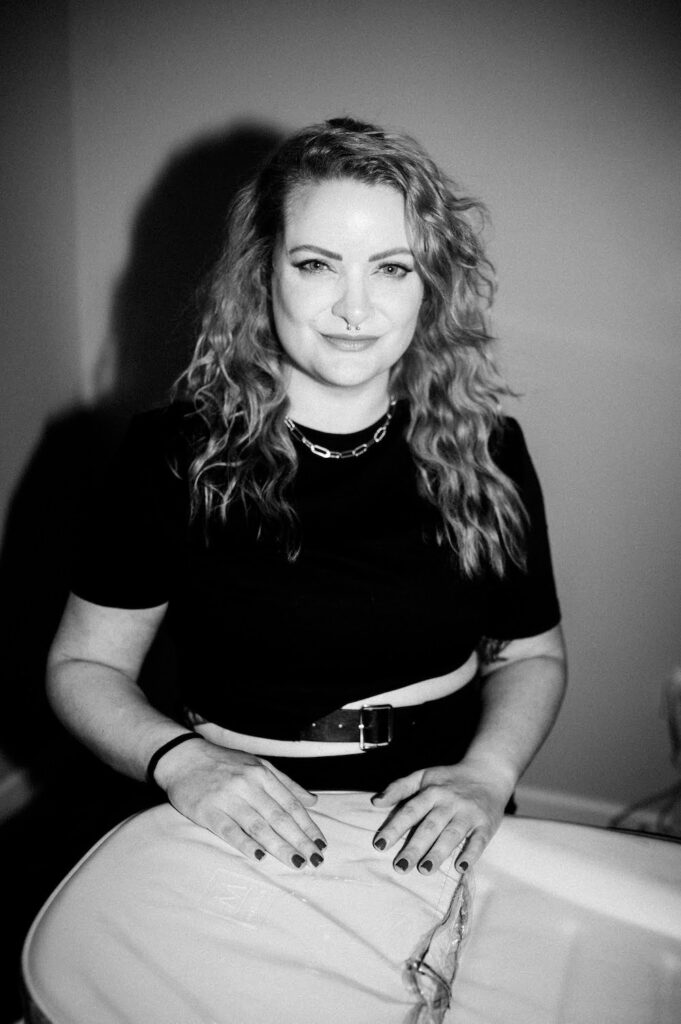
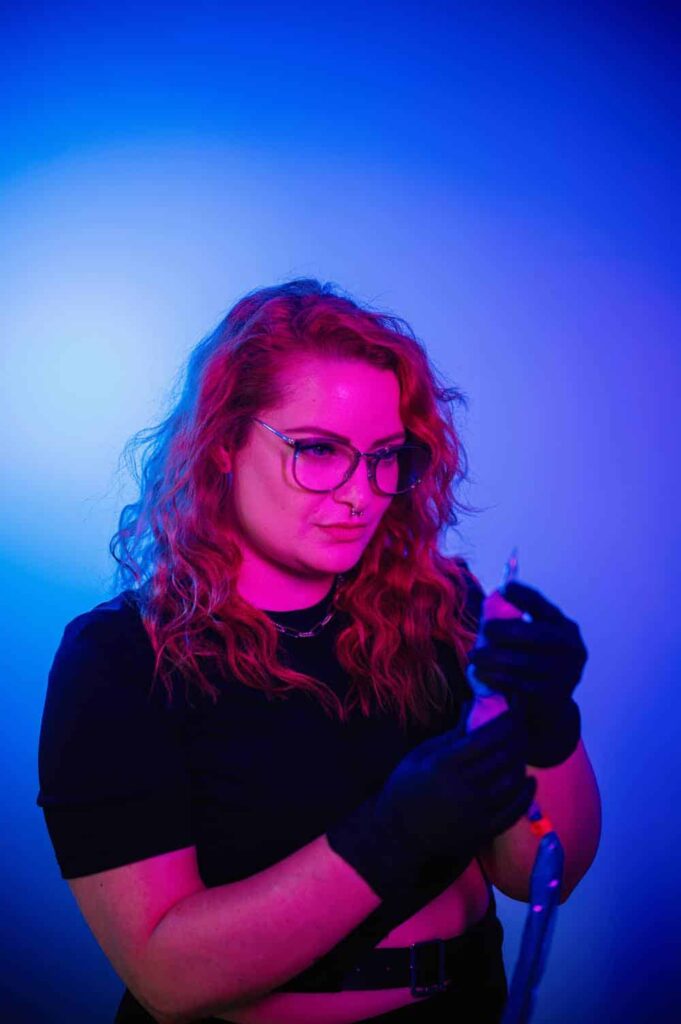
Helping people become comfortable in their skin again is the mission of Charleston-based paramedical tattoo artist Christina Hornyak, who specializes in scar camouflage, nipple and areola restoration for mastectomy patients and gender-affirming tattoos at her studio, Alchemy WV.
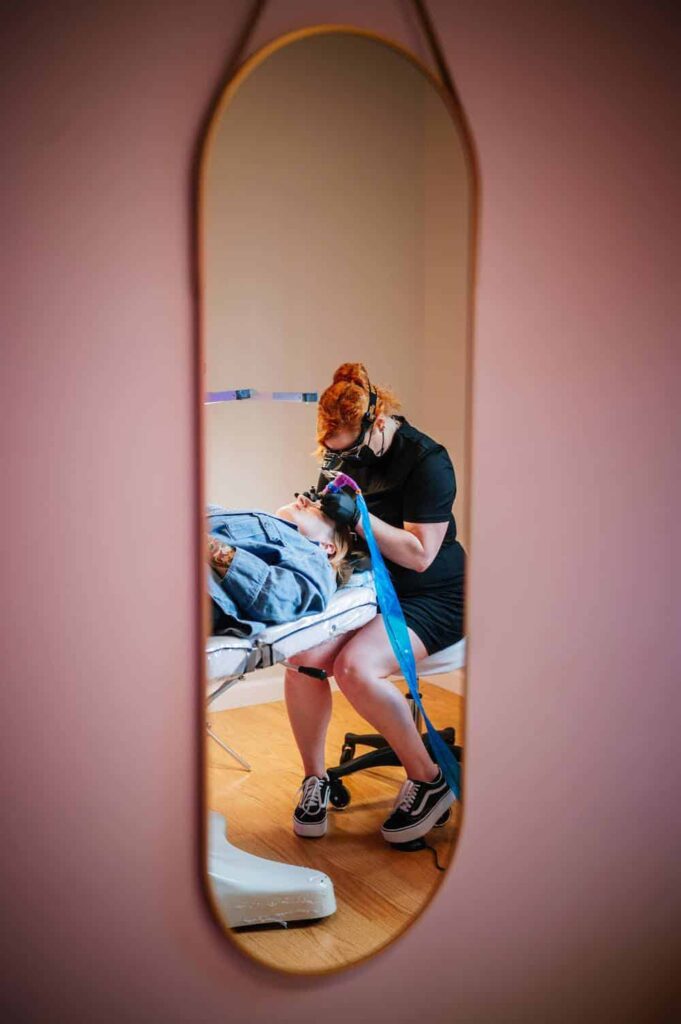
“Paramedical tattooing is primarily working on something that has come from a medical procedure, whether that’s a scar, loss of a fingernail, nipple, belly button — anything you can lose in repetitive surgeries and things like that — that make people feel insecure,” she explained.
In 2019, while already an established cosmetologist, Christina opened her own studio, offering free microblading for those going through chemotherapy after seeing friends and family lose their eyebrows due to the treatment. Inspired to pursue more paramedical services, Christina has gone on to increase her repertoire and certifications, making her one of the only paramedical tattoo artists in the state.
One of Christina’s most popular services are hyper-realistic nipple and areola tattoos, with many regional plastic surgeons sending her patient referrals after mastectomies. While the goal for this service is typically to create the most realistic-looking tattoo as possible, she is beginning to expand into more artistic tattoos as well, tailoring each tattoo to each client’s preferences and desires.
“It really is just for that individual — it’s not for anyone else,” she said. “I always like to remind people because we’re the ones that feel it and see it every day; it’s just a deeply personal process, and every skin I work on has a different story.”
Similar to areola restoration for mastectomy patients, Christina offers gender-affirming tattoos for clients who could not save their nipples after top surgery.
“I know it really helps people feel more comfortable in their home, in their own skin day to day, but also, if they’re going to the beach, to the pool or something like that, it’s not that noticeable,” she said. “Nipples are something we don’t see often, but we expect them to be there. It draws more attention if there’s an absence of something.”
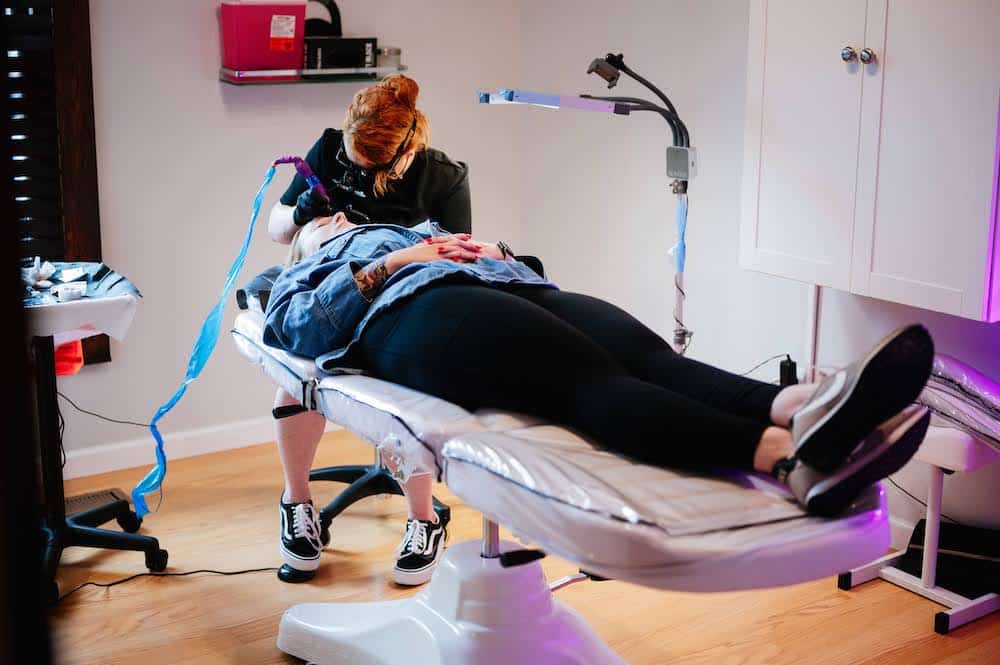
Another popular service is scar camouflage which utilizes a serum-based inkless tattooing method to intentionally and safely traumatize skin, with visible results a few weeks later.
“You can go in and change the height, depth and tone of their scars,” Christina said. “You can’t take them away completely, but it’ll camouflage them to the point where you can’t find it unless you’re really looking. That kind of rearranges the narrative to be more for them, something more important for them and what their scars symbolize.”
“When you’re going for an artistic tattoo, you want the boldness of the colors, whereas this, we have to be super careful not to oversaturate,” she said. “Colors can change so much from how they come out of the bottle to how they heal in different skin types, and I’m always working on different skin areas; the thinness, thickness or texture of the skin changes so much.”
Christina is constantly working to improve her craft. Most recently, she attended a paramedical tattoo retreat in Houston, TX, where she received seven new certifications, including 3D belly buttons, melanin-rich skin and more.
“There’s special serums you can use on dark scars; that was part of the melanin-rich skin certification I was pursuing,” Christina said. “Because we can work with the texture, but what about that color? You can traumatize skin, and it’ll bring some melanin back to it, but if it’s over-saturated, how do you brighten it? In that training, I found out how to do that.”
There are no in-person training facilities for paramedical tattoo artists in West Virginia, and as one of the only ones in the state, Christina found it refreshing to spend time with and learn from others who practice the same art form across the country during the retreat.
Lack of paramedical tattooers isn’t the only problem for West Virginia; cost is another distinction. Larger studios and artists who own multiple shops outside the state have a higher price range, whereas studios in West Virginia seem more accommodating to what their clients can best afford. In the beginning, Christina herself would charge low rates for her services, even if it was not financially viable at the time.
“I think that’s a really hard thing with paramedical tattooing; there’s an internal conflict, like it feels wrong to charge,” she said. “Even if you don’t charge, you can’t keep doing it. So what do you do?”
In Christina’s case, she was recently named a Sauler Select Artist by the Sauler Institute, the only paramedical academy in the country. They can now refer patients to her and help with grant funding. And each quarter, one of Christina’s clients can receive eyebrow, nipple or scar camouflage work free of charge.
In addition, Christina wants to expand Alchemy WV into her hometown of Morgantown, WV, and she’s begun connecting with more surgeons in that area who will be able to refer patients to her instead of the more expensive out-of-state studios.
As a nontraditional female tattoo artist, Christina said tattooing can often be intimidating, having been a male-dominated space for so long. This has encouraged her to create a safe and comfortable studio, working to alleviate the nerves and concerns of all her clients. For many, paramedical tattoos are their first, and the work often comes with emotional baggage Christina must work through as well.
“I like to talk them through their stress by being super informative, walking them through everything to expect,” she said. “Anytime you put your hands on someone in a private setting, it opens up conversation; they start talking about things they normally wouldn’t talk to anyone else about, and a lot of those scars I’m working on come with stories and a history and probably a less desirable time in their life.”
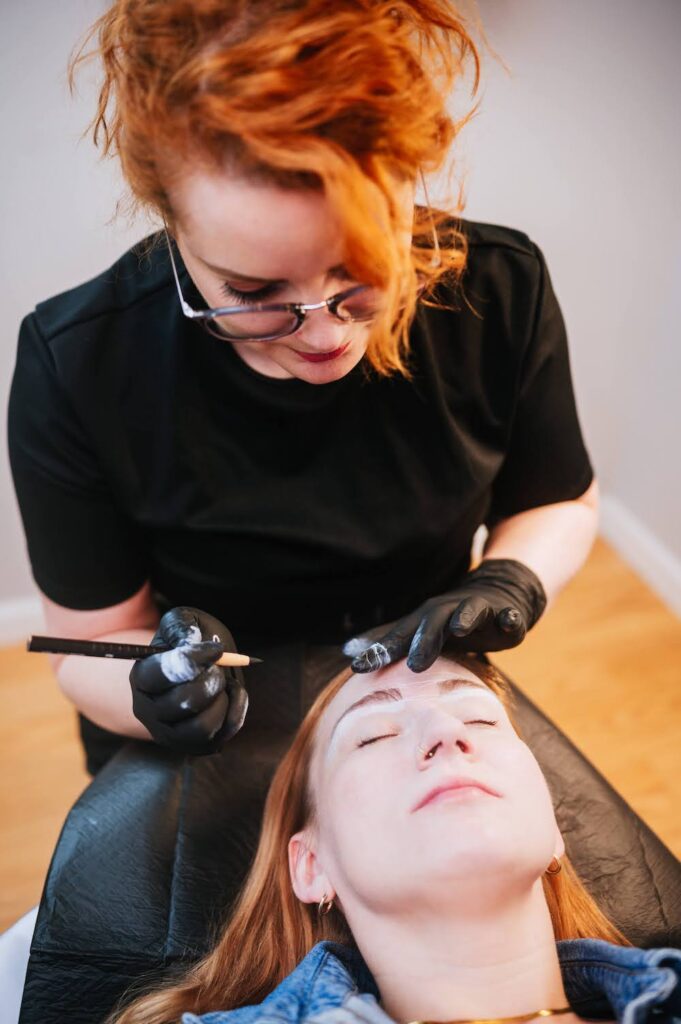
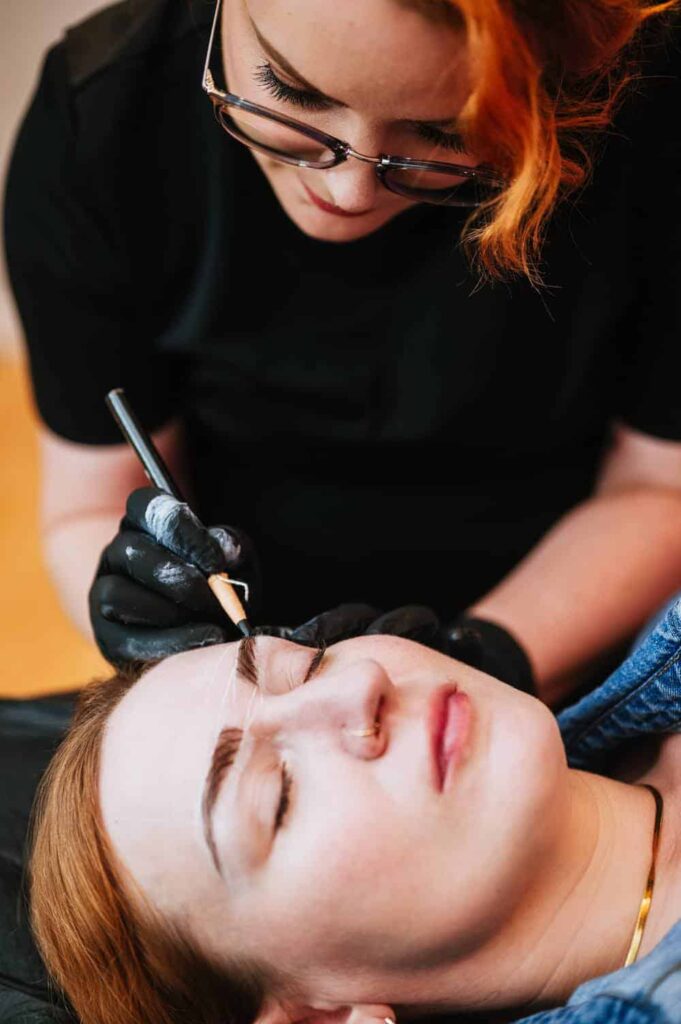
The joy from clients and sense of accomplishment she feels outweigh the emotional lows, she says. Even working with patients who are terminal, Christina focuses on the positives and freely offers compliments to combat insecurities, just as her tears might flow freely on her commute home.
“I think the hardest part is to not get too emotional after they leave and then take it home with me,” Christina said. “Because I talk to people who are currently going through chemotherapy, and that gets really heavy sometimes. I work so hard to create a good space and give good energy to my clients because they usually come in stressed.”
Keeping the conversation positive is sometimes the most she can do, but it makes a big difference. Talking with Christina, her sense of humor and positivity are contagious.
Having connected with other paramedical tattoo artists throughout her career, Christina says the culture in Appalachia is different, with friendlier and more welcoming people.
“I’ve really found the most welcoming atmosphere in a few of our primarily nonbinary tattoo studios,” she said. “My favorite is Communion Tattoo Gathering, and that’s ran by my friends, who help me a lot with the artistic side of tattooing as well. They’ll open their doors to anybody. I was handing out candy there for Halloween, and people were poking in all the time, while everyone’s tattooing and doing flash work. But no one was afraid to enter or ask questions.”
There’s also a more diverse group of tattooers in West Virginia than someone from outside Appalachia might expect, she noted.
“When I spend time in other tattoo shops locally I’m always surprised by all the different types of people in and out of there, some you maybe wouldn’t expect,” she said. “Tattoo shops don’t have a specific clientele here, like some places do. In West Virginia, it’s always like, ‘We’ll take care of you and treat you nicely while you’re here.’”
“You’re seeing some that fit the old protocol, and then you’re seeing some more queer or nonbinary folks and it flows; even though everyone’s so different, they make it work,” Christina said. “You can just tell the comfort level is way higher in the tattoo shops around here.”
Christina hopes to give that comfortability and judgment-free nature to all of her clients at Alchemy WV as well.
“That sticks with someone,” she says. “They’re leaving with something permanent, but it’s the experience that’s tied to that permanent mark on their body. They were treated respectfully, taken care of, and they were checked on. A bad experience they might have to carry with that tattoo forever.”
Paramedical tattooing was a natural evolution for Christina: creating meaningful art and helping those in her community feel confident and beautiful. She hopes to expand her services around the state to give West Virginians and other Appalachians alike the opportunity to feel just like themselves again.
To get in touch with Christina or book an appointment, visit alchemywv.com for more information.
