

In an era where the music industry can feel increasingly digitized and distant, something handmade is thriving. Across Appalachia, a growing cohort of visual artists is carving, inking and illustrating its way into the soul of the region’s music scene — creating limited-run gig posters and merchandise that carry as much heart as the songs themselves. These artists aren’t just making promotional materials; they’re documenting musical moments in a medium meant to be held, cherished and remembered.
Together, they’re building a visual archive of Appalachian music, one block print or screen layer at a time.
What makes this movement so compelling is its deeply regional character. Letterpress and screenprint artists across Appalachia are aligning themselves with folk, country and Americana musicians in ways that feel both organic and essential. The artists behind these prints are often rooted in the same cultural soil as the musicians they depict — sharing not only an aesthetic language but also a deep respect for craft, history and place.
To better understand this creative intersection of music and visual art, we spoke with four leading regional designers working in the folk, country and Appalachian space. From woodcut letterpress studios to screen-printed wildlife illustrations, each artist brings a unique perspective to how music is interpreted and remembered through their visual craft.
Bobby Rosenstock – JustAJar Design Press (Marietta, OH)
Based in Marietta, OH, Bobby Rosenstock is a printmaker and illustrator whose work has become a mainstay of the music poster scene, not just in Appalachia but across the country. Alongside his wife, Sara, Bobby runs JustAJar Design Press, a letterpress studio known for its bold woodcut textures and hand-carved style. With a background in painting and traditional printmaking, Bobby has carved out a niche for himself — literally.
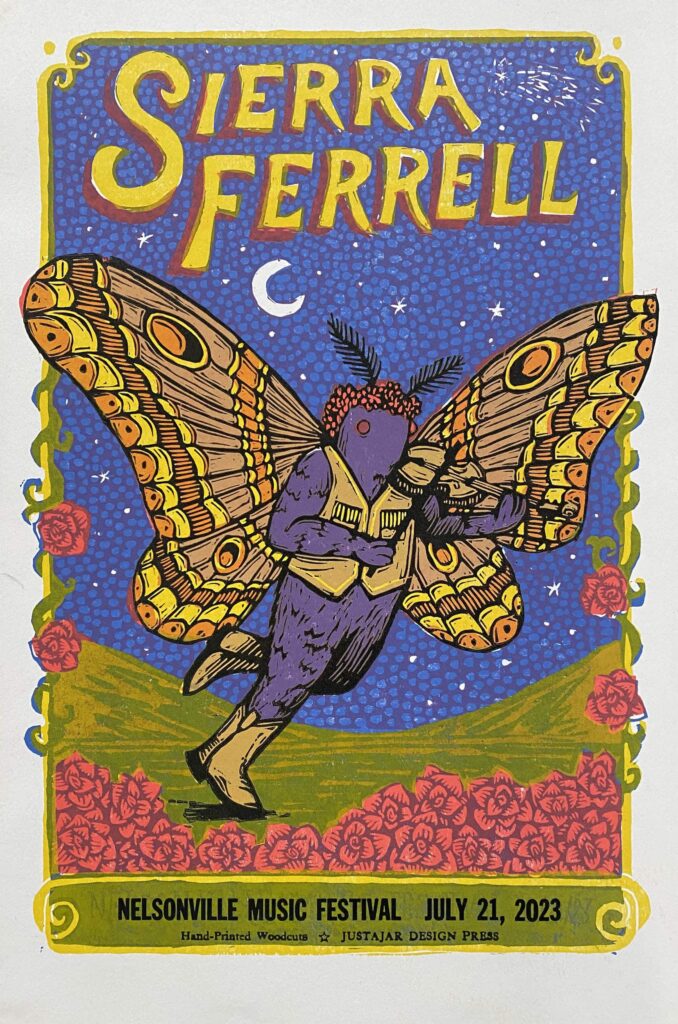
“My senior year at Alfred University, I discovered woodblock printmaking and fell in love,” Bobby said. After moving to Marietta in 2009, he set up shop in his garage with a Vandercook press and began creating. What started as a personal creative outlet quickly grew into something much bigger. “When I discovered letterpress printing, I found what I was looking for: a way to print my woodblocks on old presses that had a commercial element to it but were still manually operated.”
While Bobby has lived in Appalachia for 16 years, he was born in Queens and grew up in New Jersey. “Before I moved here, I played the banjo and made folk art that was rooted in storytelling, so I feel like this is where I was meant to be.” Bobby said he loves living in Appalachia, but he’s also aware that it’s not where his family is from. “I try to celebrate the culture while being respectful as a transplant.”
One of his earliest poster clients was Stuart’s Opera House in Nelsonville, OH. When Bobby offered to create a free poster for a Dirty Dozen Brass Band show, the resulting design was so well received that they began hiring him regularly. That spirit of mutual trust and creative freedom has carried through most of his musical collaborations.
“One of the great things about doing gig posters is they typically give the artist lots of creative freedom to do their thing,” he said.
His process is deeply hands-on and time-intensive. Bobby begins with rough sketches inspired by the musician and the venue, which are then refined and sent for approval. Once finalized, each color is carved into a separate block of cherry plywood. The result is a multi-layered image that can take up to four weeks to complete. “My minimum run is typically 100 posters, and my biggest run has been 1,000,” he said. “It can take anywhere from one to four weeks to complete a poster.”
What drives Bobby, beyond the craft itself, is community. “It’s all about community, getting to be a part of the community of artists and musicians is a great thing,” he said. “The poster artist community is super supportive of each other, we love getting together to talk shop.”
Over the years, he’s created posters for everyone from Lorette Lynn and Charley Crockett to Sierra Ferrell and Billy Strings; he even worked directly with John Prine on three posters before the legendary songwriter’s passing. “That was pretty special,” he recalled. “I grew up on his music, and it was an honor to get to make art for him.”
He’s also had the opportunity to make art for his own band, Oyo. For both of the band’s records, Bobby hand-printed and assembled the album jackets, making each album cover a limited edition print.
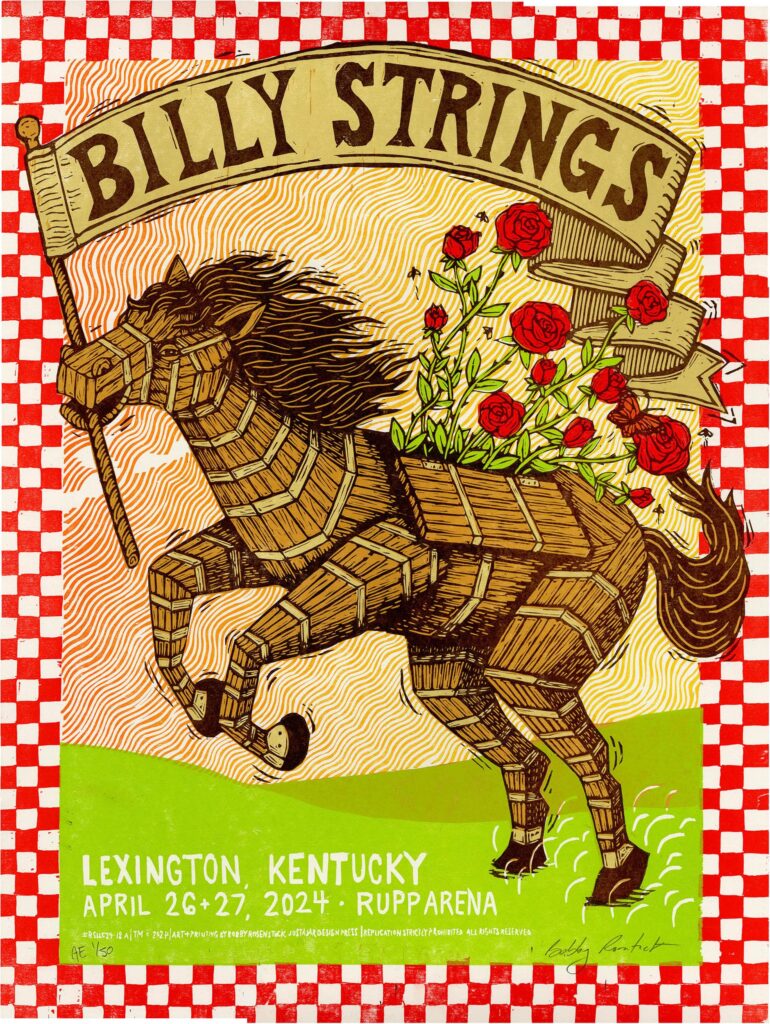
For Bobby, making posters is more than a job, it’s a way to contribute to the cultural memory of the region. “Artists absorb their surroundings and create work that can become a unique portrayal of place,” he said. “I try to be an active member of my community, and having my art become a visual representation of my region is something I strive towards.”
Logan Schmitt – Logan Schmitt Illustration (Wheeling, WV)
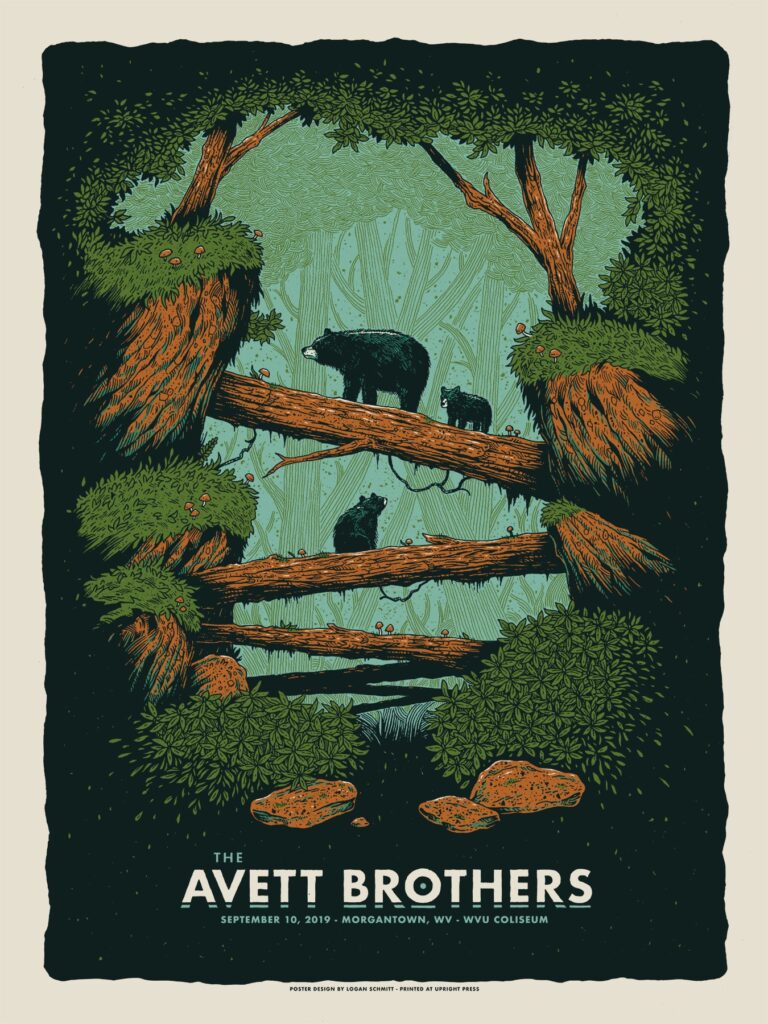
Logan Schmitt’s illustrations are unmistakable, with densely detailed wildlife, mysterious forests and animals mid-motion, often swirling in rich textures and soft palettes. Logan, who is based in Wheeling, WV, has become a go-to illustrator for Appalachian musicians and festivals, blending his love of nature with a growing roster of musical collaborations.
His entry into poster design began at the Columbus College of Art & Design. “I realized that most of the illustrators and designers I really liked were making screen-printed licensed alternative movie posters and gig posters for bands,” he said. “As soon as I was able to take printmaking classes I got right into it.”
He started cold-calling bands or asking friends’ bands if they were coming through town to see if he could make posters or other merch for them. Eventually, it snowballed into more consistent work.
Logan has worked with artists like Tyler Childers, The Avett Brothers and the Nelsonville Music Festival. He first broke into the scene in 2015, designing a poster for a band that he didn’t know personally, a post-rock instrumental band from Akron called If These Trees Could Talk.
The connection between nature and music runs deep in Logan’s work. “It’s definitely shaped my aesthetic,” he said, about living in Appalachia. “I mostly draw wilderness and nature scenes, with many of those featuring Appalachian wildlife and plants.”
And while Logan says he’s not always sure there’s a distinct Appalachian aesthetic, he does believe the region’s artists are helping shape something special. “Hopefully folks in Appalachia can feel proud to see artists and designers from Appalachia making imagery for Appalachian bands and musicians,” he said. “It’s something we can all feel a little bit of ownership over.”
Logan is also appreciative of the community in which he’s now embedded. “It’s an incredible community full of some of the best people I know,” he said. “There’s even an organization called The Poster Institute that helps put these shows on and manages a lot of the back-end stuff. I’m grateful for them and my poster friends.”
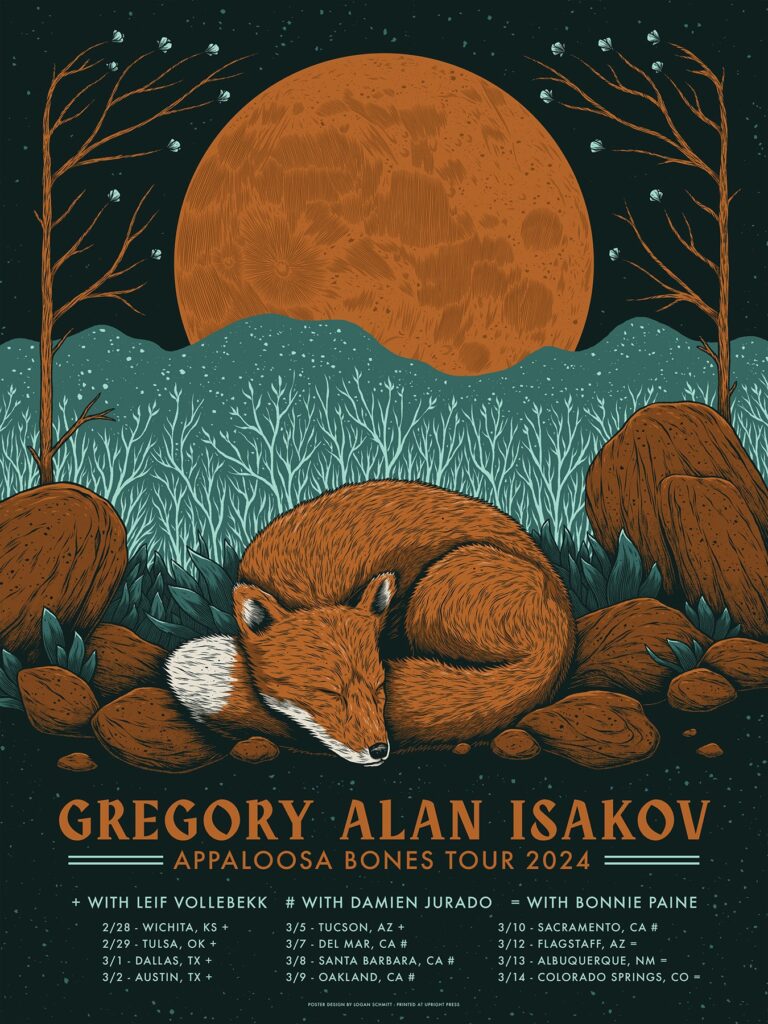
His poster for The Avett Brothers in Morgantown remains a personal highlight, but it’s his recent work on branding for the Nelsonville Music Festival that stands out most. “We really love that festival so it was great to play a part in the visual language of the weekend,” he said.
Nicholas Tankersley – NDTank (Fayetteville, WV)
Nicholas Tankersley didn’t come to design through a formal education — he found it through exploration. “I’m self-taught,” he said. “After college, I started messing around with t-shirt design, and somehow, that turned into regular freelance gigs. Branding work, tees for different companies, whatever came along.” One of his first big breaks was designing the artwork and merch for High Five Festival, a freestyle ski event in Annecy, France. “To this day, I don’t know how they found me — and I was honestly too afraid to ask in case they realized I had no idea what I was doing.”
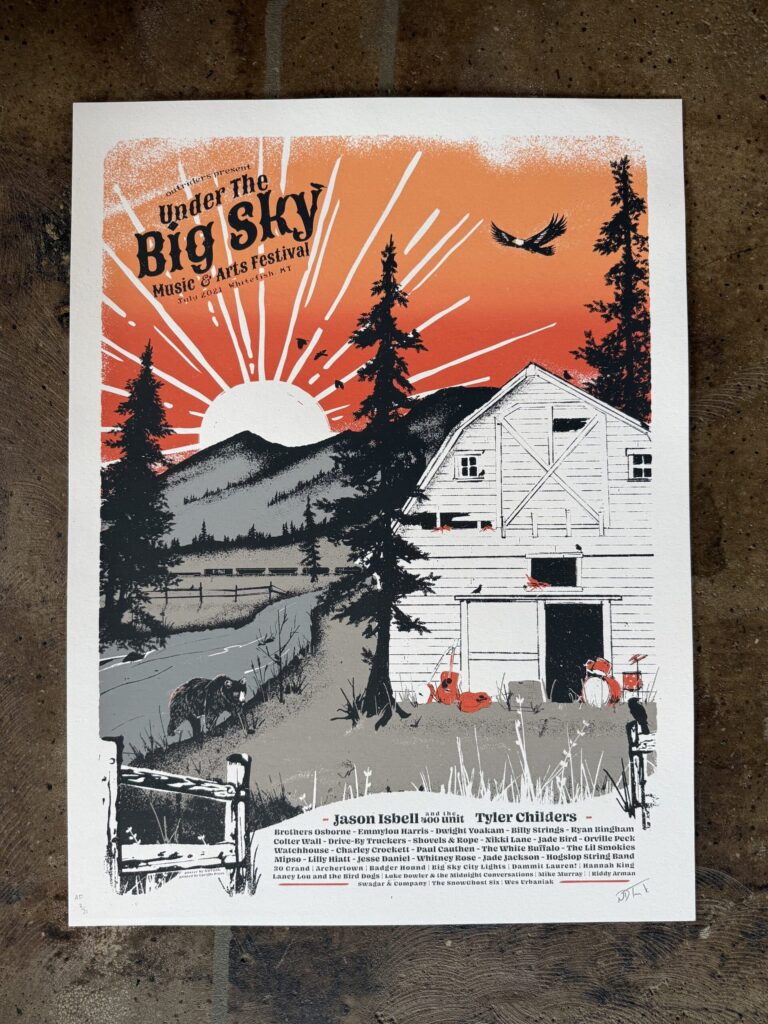
His first real gig poster came shortly after, for Jeff Tweedy in 2018. “It felt a bit like jumping in the deep end,” he said. From there, his client list rapidly expanded, including work for Wilco, the 20th anniversary tour of Yankee Hotel Foxtrot, Radio City Music Hall, The Ryman and the Ghost of Paul Revere’s final shows.
Growing up, Nicholas spent a lot of time in the woods wandering around and getting lost in the landscape, so naturally, themes of nature and wildlife show up in his work often. “I’m also drawn to forgotten places: abandoned buildings, worn-out signage, little hints of history that have been left behind,” he said. “There’s something beautiful about the way the past lingers here. I try to carry that into my work.”
Nicholas’ design process is grounded in mood and narrative. “Everything usually starts with a conversation,” he said. “We’ll talk about the feel of the project, any themes they want to explore, or if/how much they want to highlight the venue or host city.” In some cases, he’s even been given access to unreleased music, like Jeff Tweedy’s Warm album, to help guide his visual approach.
A standout example is the four-part poster series he created for Jeff Tweedy’s multi-night run at Largo in Los Angeles. “The sun gradually set over the course of the series, four different paper colors and one changing screen layer per night,” he said. “I was grateful they were open to the pitch. It pushed production costs up a bit, but the result was something really special.”
While Nicholas doesn’t screen print his own designs, he works closely with trusted printers like Jess Hinshaw at Upright Press to ensure the finished pieces match his vision. He’s particularly proud of his album artwork for Becky Buller’s Jubilee. Nicholas spent a lot of time listening to the album on repeat, which Becky describes as a sound cycle, meant to be listened to from start to finish as a journey through a challenging time in her life.
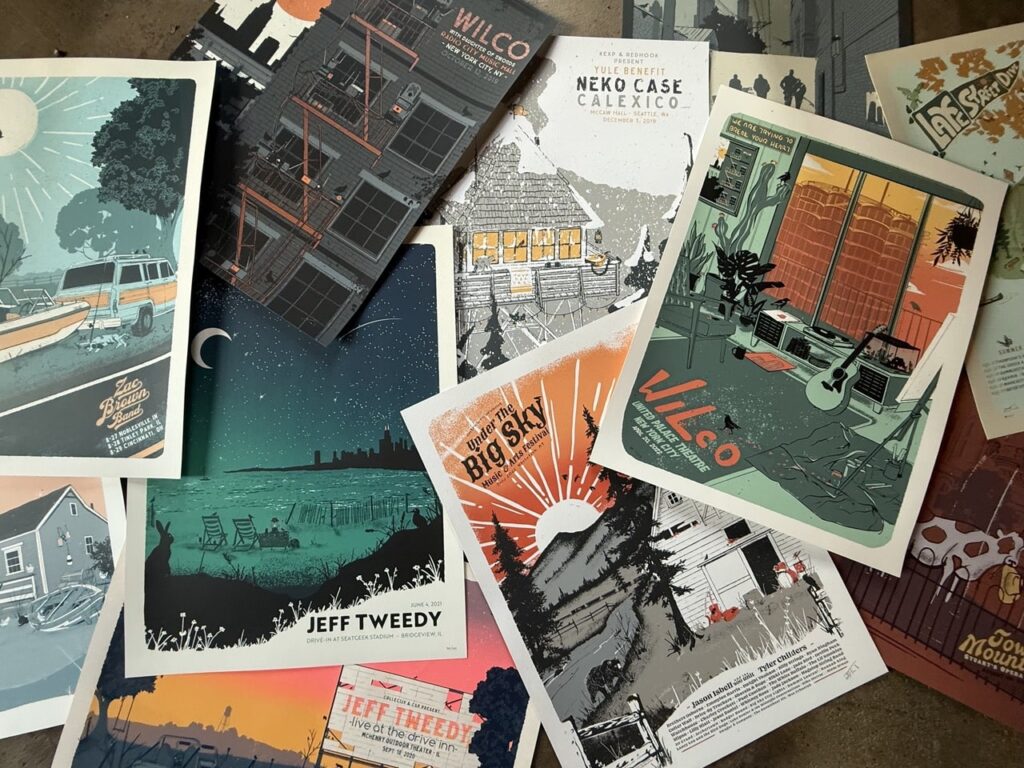
“We were able to sit down and talk in person about what went into its creation,” he said. “It was an honor (and honestly a bit intimidating) to try to visually represent something so personal. As a bonus, her band came and played a live set of the entire album in my Lost Appalachia shop, which made the whole experience incredibly special and full-circle.”
What stays with him most are the personal connections. “I’ll get a message from someone saying they were on a first date or their child’s first concert and missed out on the poster, and they’re hoping I’ve got one left,” he said. “Things like that remind me these pieces help people hold onto a little slice of time.”
Emily Sokolosky – Base Camp Printing Company (Charleston, WV)
When Emily Sokolosky opened Base Camp Printing in 2016, she had a vision: to carry forward the letterpress tradition with bold design and a commitment to local culture. But she had no idea just how directly that tradition would be passed down to her.
Emily was initially drawn to letterpress for its physicality and its history. During her junior year at WVU, her professor gave a presentation about letterpress printing and the GramLee Collection, a collection of wood engravings that were used to print feed sacks back in the 1800s.
“I was fascinated by the engravings,” she said. “After the presentation, I asked my professor if he needed any help with the archive or if there was any way I could learn more. He created a letterpress independent study for me.” Through her work with the collection, Emily was able to create a portfolio of letterpress prints she used to apply for an internship at Hatch Show Print, a legacy letterpress print shop in Nashville, TN.
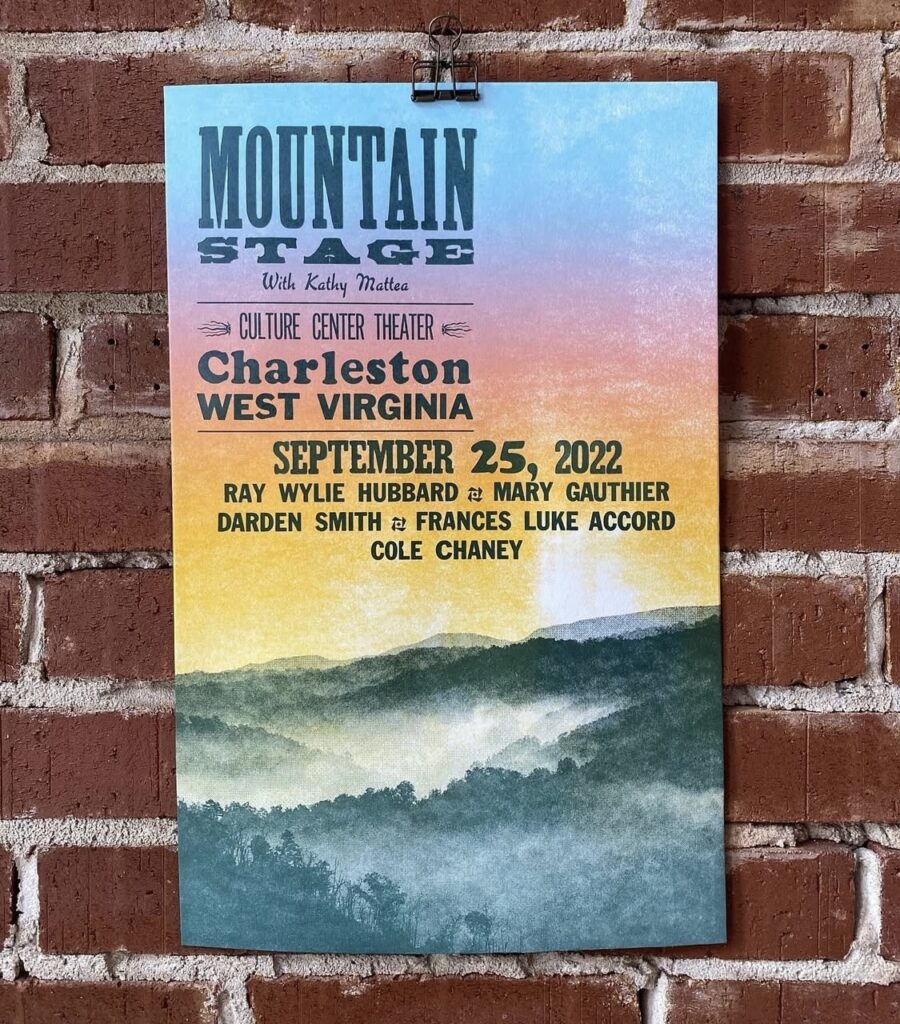
“My experience at both WVU and Hatch Show Print had a huge influence on me and inspired my path to creating music posters.”
For Emily, Appalachian values have shaped the look and mission of her shop, Base Camp Printing Company, which she runs with her sister Betsy in Charleston, WV. Shortly after opening the shop, a man named Harry “Moke” Wagner Jr. walked in, and after testing her about her commitment to the craft, offered Emily his late father’s entire print shop — wood type, engravings and all. “This was absolutely life-changing,” she said. “Most things needed to have a letterpress print shop are not being made anymore.”
The look of their shop is inspired by the type and images Harry collected, and their mission is inspired by Moke’s gift. “We wouldn’t be who we are without Appalachian generosity. Each poster is created with inherited tools.”
Base Camp has become a staple of the Charleston music scene, producing stunning linocut-and-type posters for acts like Philip Bowen and West Virginia’s Mountain Stage. Some posters are collaborative, especially with solo artists, while others are more interpretive. “When we get a poster job for an independent act, we always like to get as much input from the artist as possible,” she said. “But usually the musicians want us to run with our own inspiration from their music.”
For Emily, these posters are about more than just art. They’re about expression, particularly for Appalachians. “When Appalachian musicians and visual artists collaborate together, we are able to express a deep sense of place all Appalachians share,” she said, “even when it’s hard to explain to those outside of Appalachia.”
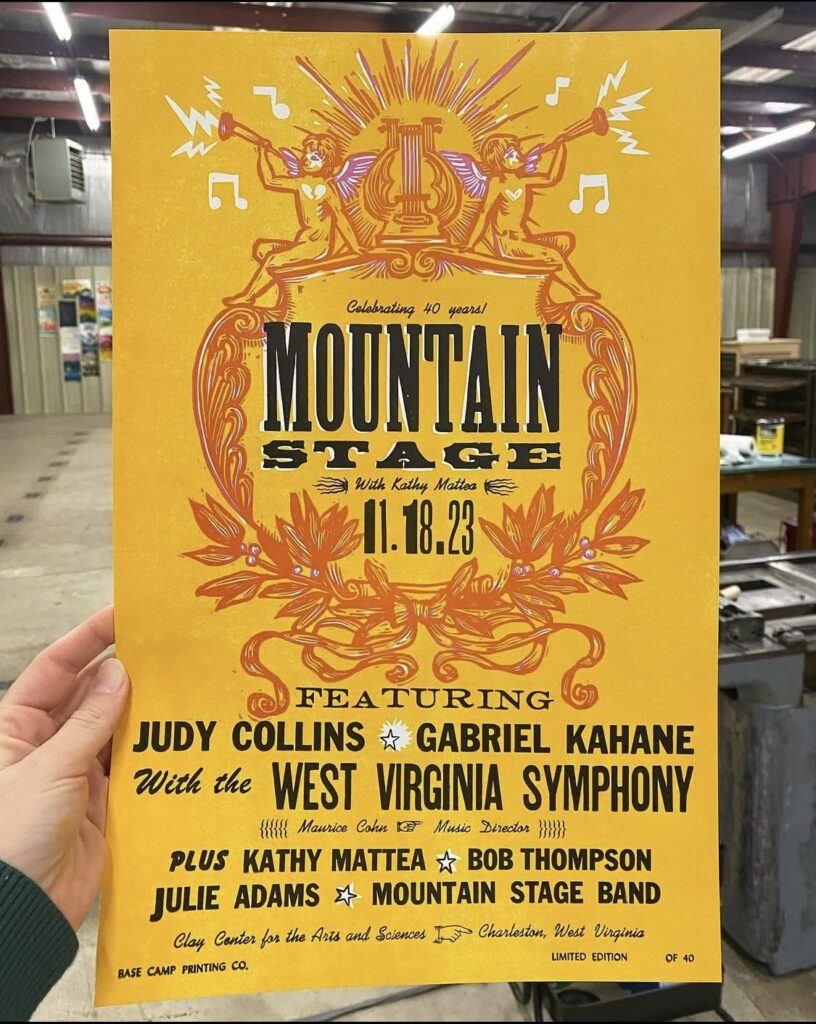
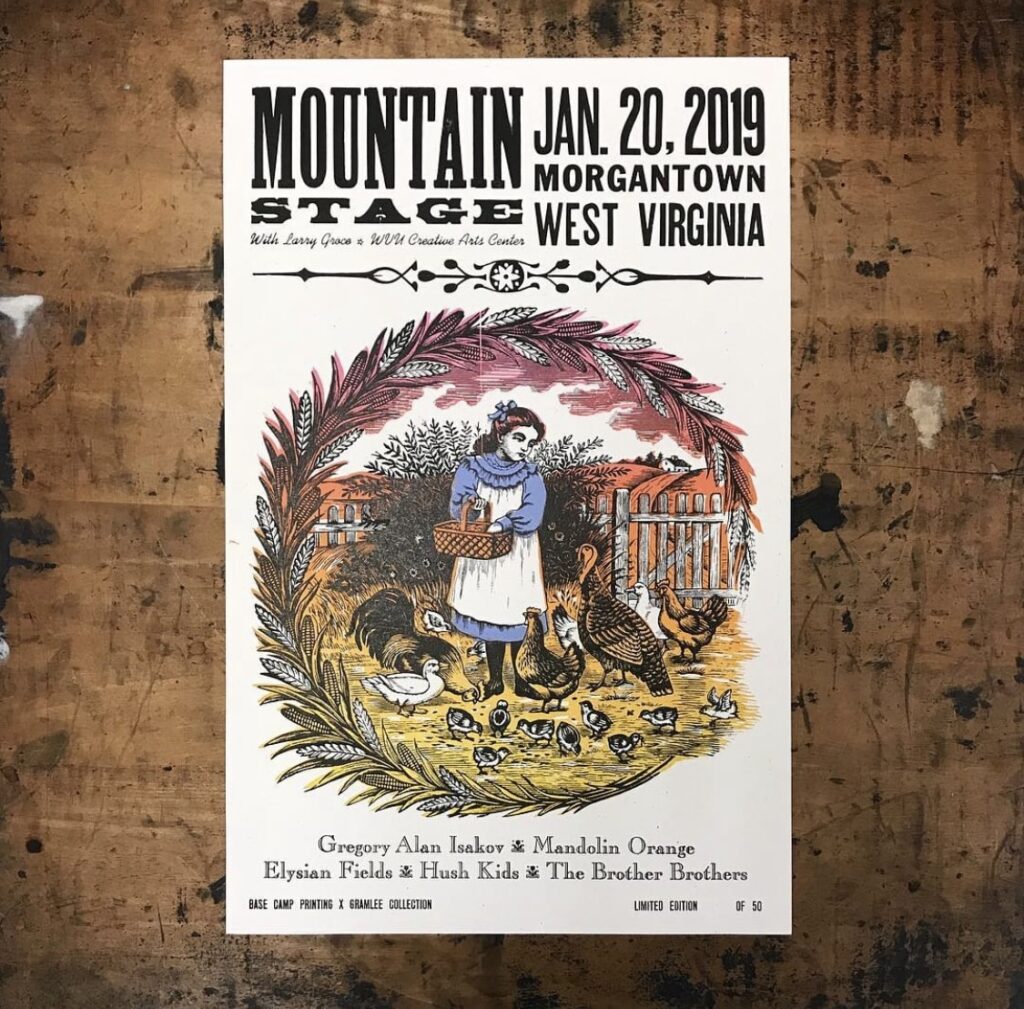
She’s especially proud to be working on Save A Life Day 2025, a nationwide event aimed at distributing free naloxone and raising awareness about the opioid crisis. “This will be our third year making posters for Save A Life Day, and seeing it grow each year has been so inspiring and rewarding.”
In the Appalachian music scene, posters are more than mementos. They’re a convergence of art forms. Each print is a collaboration not just between artist and musician, but between tradition and innovation, region and audience. And through the presses and pens of creators like Bobby, Logan, Nicholas and Emily, Appalachia is getting the visual legacy it deserves — layer by layer, print by print.
