

Barrie Kaufman doesn’t just create art — she sparks calls to action. With over 45 years of thought-provoking creations, her work celebrates the natural beauty of our environment while confronting the challenges that threaten it. Through her art, Kaufman transforms pressing concerns into stunning visual narratives, using her creativity as a tool for advocacy.
Born and raised in Charleston, WV, Barrie was surrounded by the state’s delicate balance between industry and nature. Watching the impact of pollution firsthand inspired her artistic callings.
“Growing up in West Virginia, it was this dichotomy — these beautiful mountains right next to industrial ruin,” Barrie said. “Driving through South Charleston in the ’60s, you could smell the fumes from the plants all through the valley at certain times. I think seeing that contrast — the beauty alongside destruction — really shaped my perspective.”
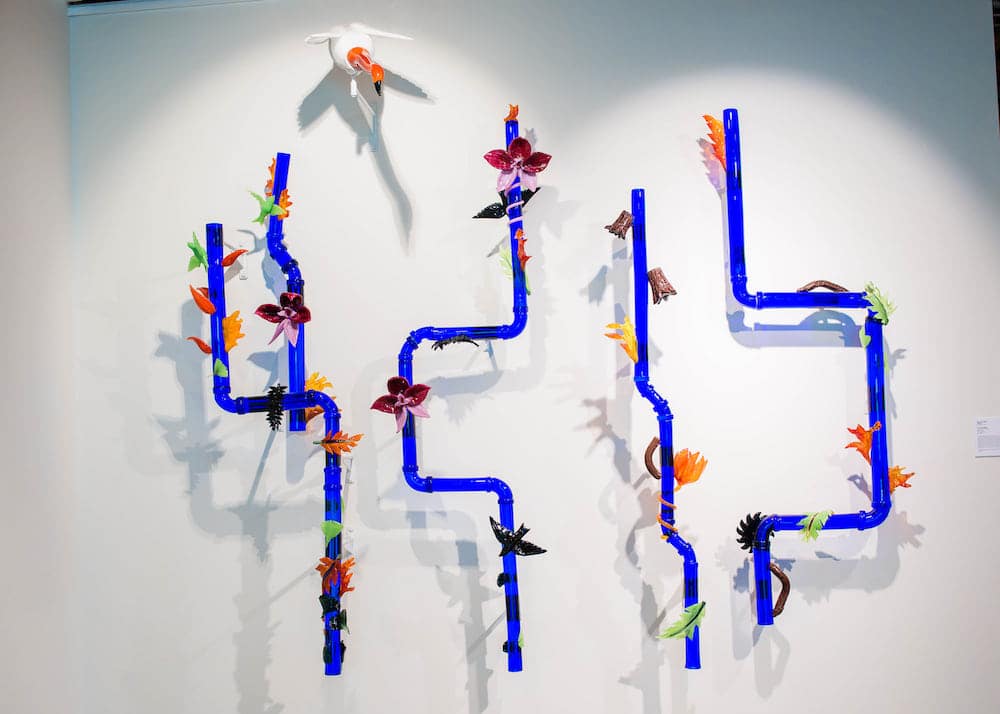
Her work goes beyond eye-catching beauty; they are stories, conversations and sometimes, urgent warnings. Take, for example, her glass sculpture, It’s In The Pipes. Created during her residency at the Pittsburgh Glass Center, the piece responds to the 2014 water crisis in Charleston, where chemicals from coal-cleaning operations leaked into the public water supply, leaving 300,000 people without clean water. Barrie describes the work as a deeply personal response to the crisis.
“I was doing environmental work before that, but the crisis really impacted me,” she said. “We didn’t have potable water for at least three months, and I was driving an hour to Huntington just to do laundry. When you don’t have water, you become very aware of how vital it is to life.”
The water crisis initiated a decade-long focus on water in her work. But even before then, she explored issues like mountaintop removal and the environmental damage happening in West Virginia.
This passion for environmental storytelling is now taking Kaufman to one of the most remote regions on Earth: the Arctic Circle. Later this year, she will join a group of artists and researchers on an expedition to explore the region’s fragile ecosystem and work with mixed media painting, photography and glass to create works inspired by the colors and forms of the high Arctic and its rapidly changing landscape.
“I’m interested in exploring what’s happening with the ice melting and the broader impacts on the planet. I’m thinking beyond Appalachia, about the entire planet and the effects of global warming.”
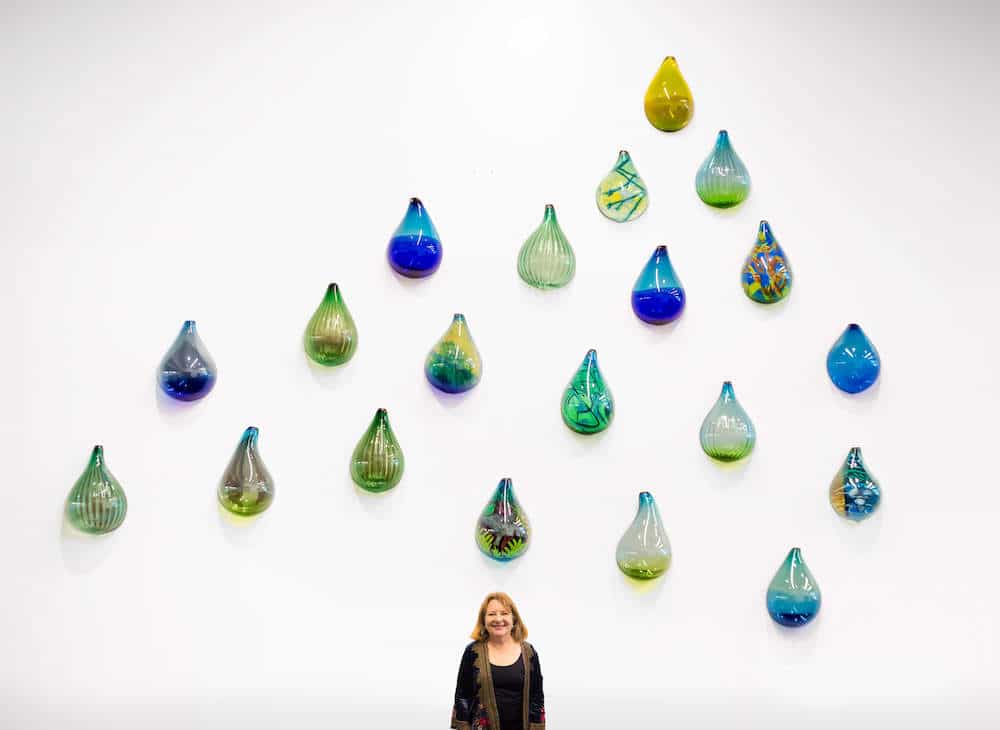
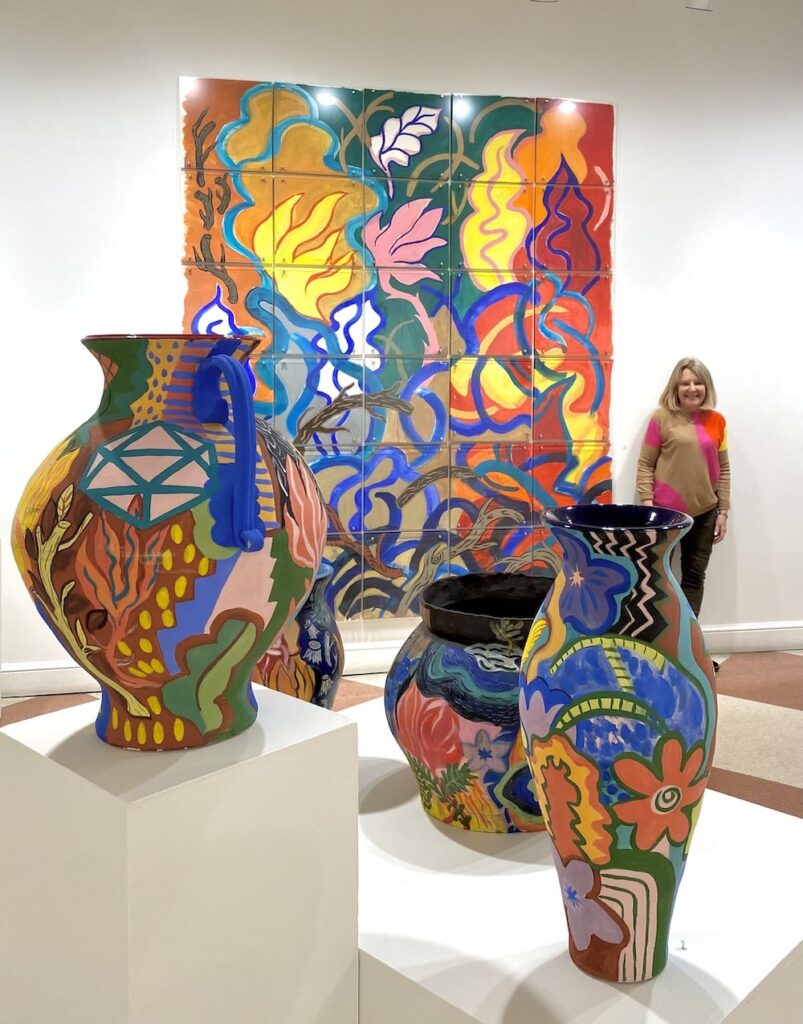
With master’s degrees in art and art therapy, she seamlessly blends her technical expertise with her passion for environmental causes. Her multidisciplinary approach spans various mediums, including painting, printmaking, glass and ceramics, continuously pushing the boundaries to reflect the needs of her messages and engage viewers from multiple angles. Her ceramic pieces incorporate vibrant, hand-painted scenes that bring natural landscapes to life. Her glass sculptures, though vastly different in material, reflect a similar energy, utilizing rich hues and intricate textures to evoke everything from the fluidity of water to the rugged surface of animal fur. Her work reflects a deep connection to nature and environmental themes, weaving together decades of expertise across disciplines to capture the diverse textures of the natural world.
“Even now, I’m always learning. I’m taking a photography course to improve my skills, especially with the type of camera I’ll use in the Arctic. When I started ceramics, I audited three semesters at Marshall University because I needed to learn hand-built techniques. I think that’s what sets me apart,” Barrie said. “I love exploring new media and taking on challenges where I don’t know much at first. There’s a lot of failure in the process, but I don’t mind because I know I’m building skills.”
Her one-woman shows have been featured at venues across Appalachia, as well as international shows at Sotheby’s in Stockholm, Sweden; Sunbury Shores Arts Center in New Brunswick, Canada; and Pressé Papier in Quebec, Canada. She’s also held residencies at the Hambidge Center in Georgia; the Moulin à Nef in Auvillar, France; and the Pittsburgh Glass Center in Pennsylvania, showcasing her dedication to artistic exploration.
Her career highlights also include participation in group exhibitions at SOFA Chicago and Art Fields in Lake City, SC, and giving lectures at the International Sculpture Conference in Pittsburgh, PA, and The Art Museum and Training Center for Glass and Ceramics in Seto City, Japan. Locally, she’s a celebrated figure — honored as West Virginia Artist of the Year in 2014 and named a 2021 West Virginia Wonder Woman by WV Living Magazine.
Her passion extends beyond the studio. As a board member for Charleston Creativity Connections, Barrie is committed to fostering creativity in her community. Whether mentoring young artists or collaborating with other artists on group work, she strives to empower others to make a difference through art.
“As an art therapist by training, I’ve always used my artwork as a form of social advocacy, whether addressing environmental issues or the broader spectrum of human experiences in Appalachia. I’d like people to think more deeply about these issues, to understand the effects on another level. I think there’s a lot of denial about the ecological crises we’re facing today,” she said.
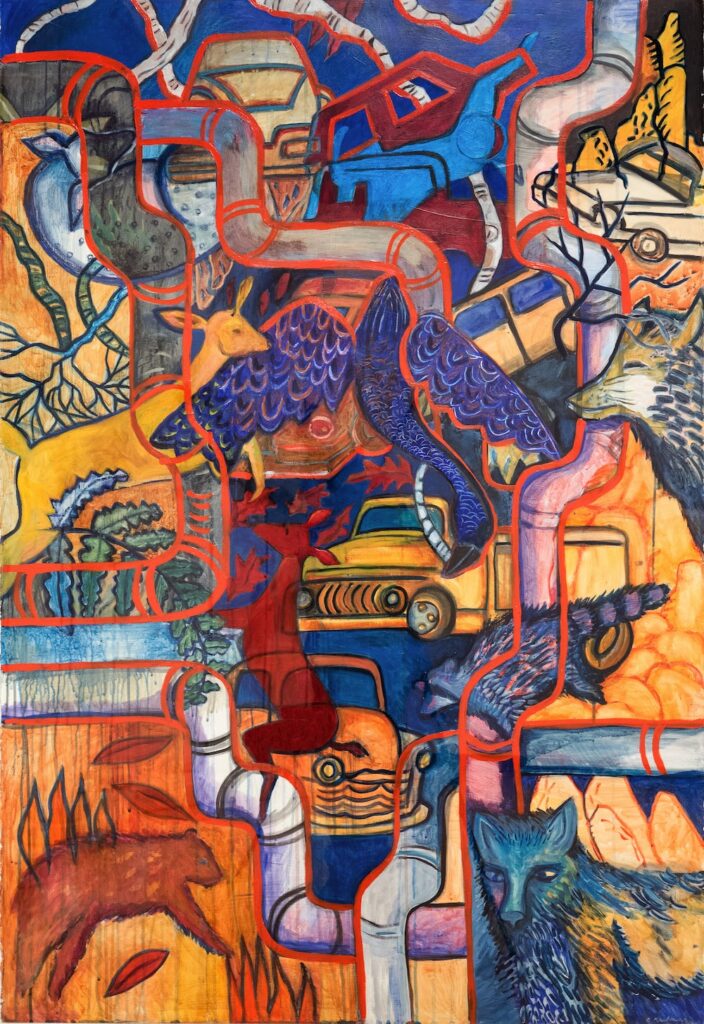
With art rooted in the rolling hills of West Virginia, yet speaking to universal truths that resonate far beyond her home state, Barrie challenges viewers to see the world differently. With a career dedicated to sparking dialogue and inspiring reflection, she sees her creations as a legacy meant to keep these messages alive.
“I hope my work outlasts me,” Barrie said. I consider myself a West Virginia artist because I’ve lived here most of my life, but I hope I might be seen as more than that. The best thing I can do is create work that people see, and that starts deeper conversations.”
Her creations remind us that beauty and responsibility go hand in hand, challenging us to care for the natural world while there’s still time. Through each brushstroke, sculpture and print, Barrie Kaufman proves that art can be a force for change — and that the Earth’s story is one worth fighting for.
