

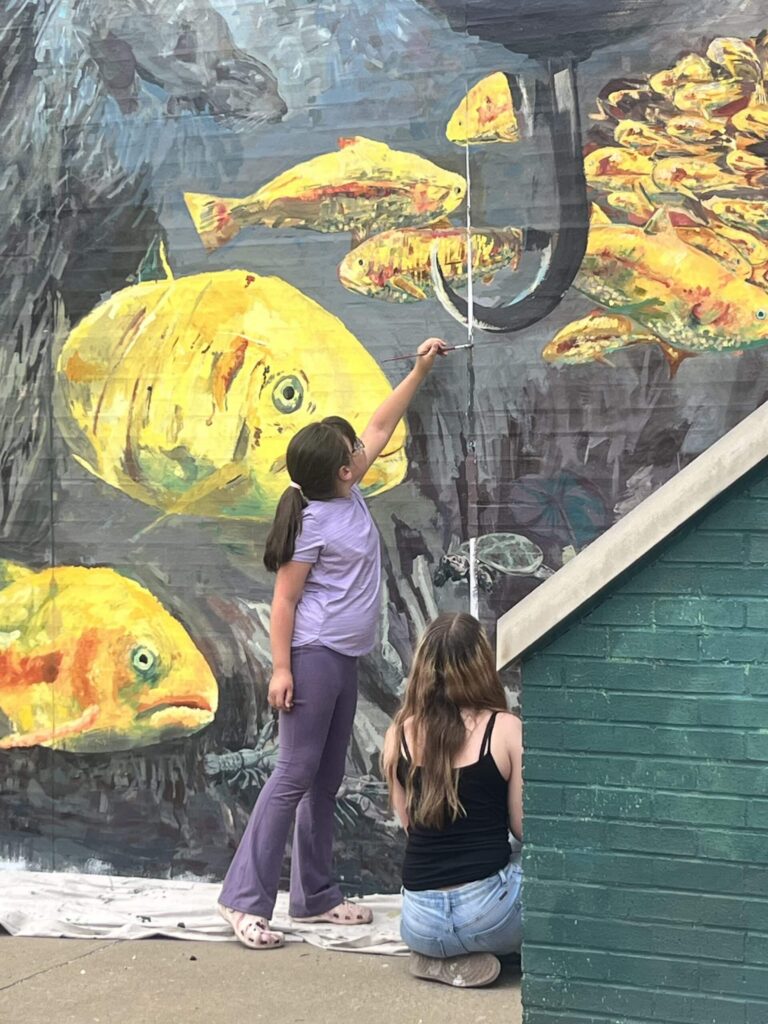
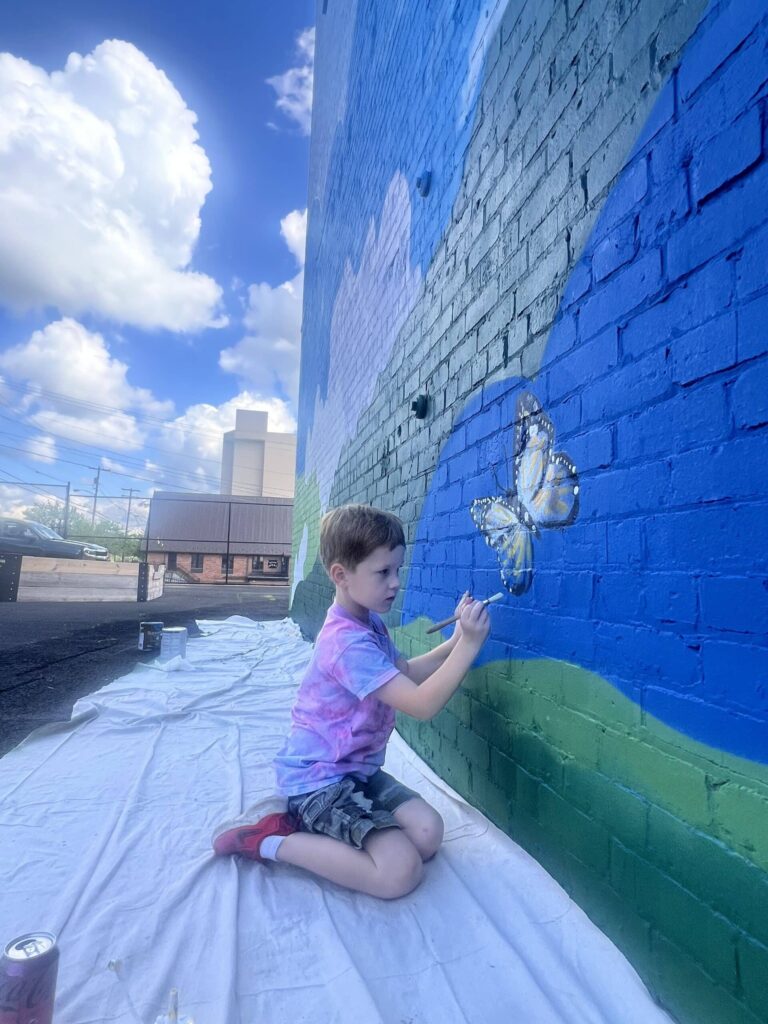
Professor of Studio Art at Fairmont State University Joel Dugan and students extend the program’s student arts public program for the sixth year in a row, completing seven murals across the state this summer.
“This is our busiest summer,” Joel said. “Last summer, we did four, and we already have plans in place to do really large walls for next summer.”
Joel credits the America250 grant given to all the counties in West Virginia to promote events and educational opportunities.
“The seed funding with the state’s WV 250 grants really started to prompt a very localized reflection of what place means to each of these communities,” he said.
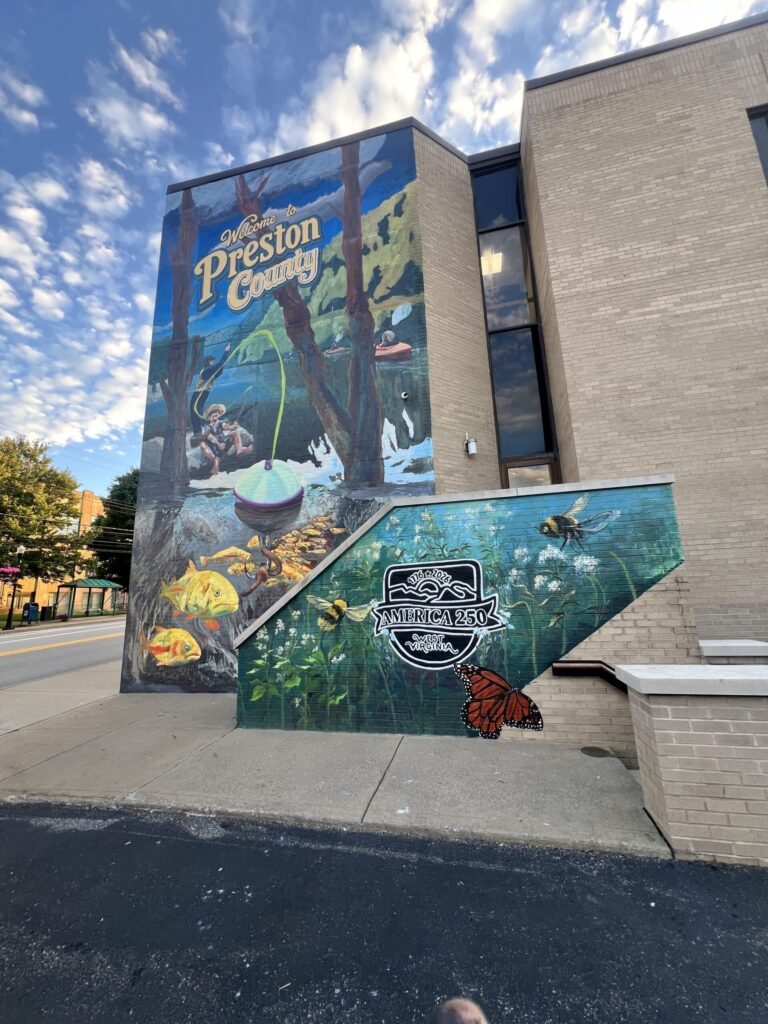
The projects spanned various counties this summer including a Marion County War Memorial, an America250-style mural in Gilmer, nature-based mural in Preston and a mural in Braxton commemorating local heritage and more.
The campaigns start with Joel doing outreach and organizing inbound messages from cities who are interested in a beautification project. Joel and the students help with incubation, projecting and consulting, if needed, before launching into the project.
Joel and his students already have murals lined up for the future, including a Head Start program that needs a new building, in which Joel hopes to enlist help from Fairmont’s architectural students.
Joel and his students began a project earlier this summer to memorialize the Barrackville mines for their 100th anniversary, but is still in search of 25% of the funding at $7400.
“We’re creating a standalone structure that will incorporate a mural, a forever pathway, or an entryway — what we call a trumpelly piece — so it makes it look like you can actually walk into it. Those miners are coming out of the mine forever.
Joel and his students want to explore even more parts of the state to help “amplify voices” and identify local communities that need help “enriching their sense of inclusion.”
“We don’t spend enough time allowing local people to tell their stories, so we can be aware of what significance looks like through their lens,” he said. “That’s what we try to do with this. We try to uplift them and also empower them to tell the story from their own point-of-view, and then we paint what we can to be as authentic as possible.”
For the first time this summer, Joel said he let students lead the designs on their own. He said he’s learned to streamline the spring class to be better prepared for the summer and leave students excited for more hands-on activities, while feeling most prepared.
He credited Harrison Walker for his work in Braxton County, as well as Salem Nichols and Quinn Ratliff.
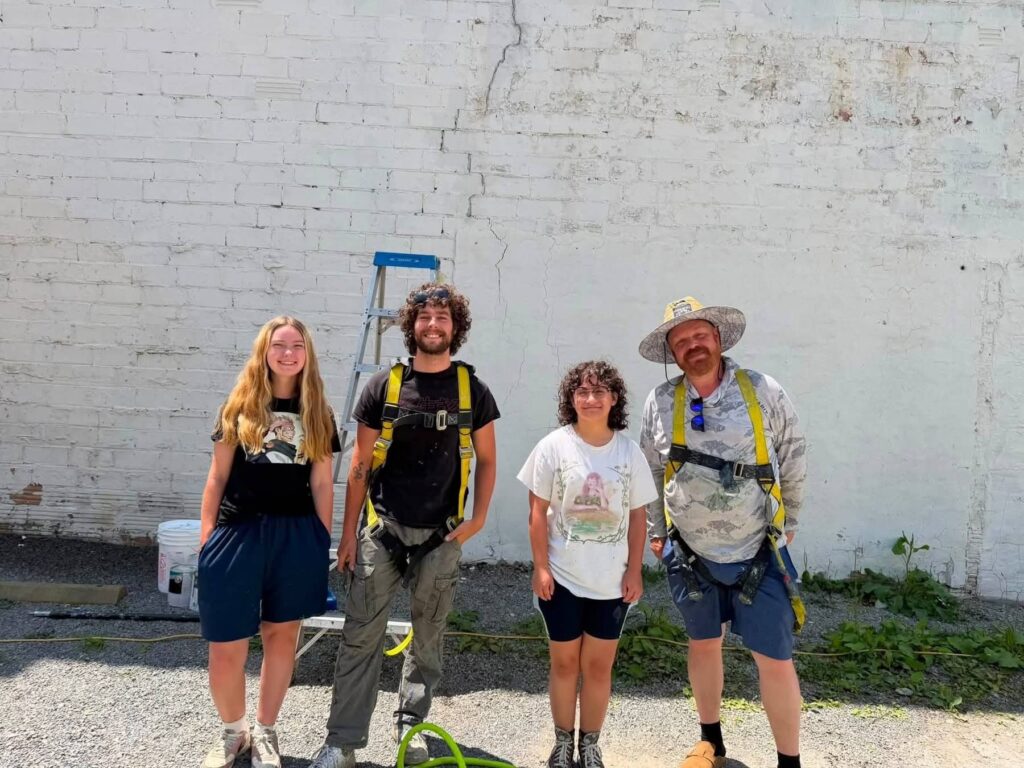
Quinn said that Joel was the reason they came to Fairmont State due to his incredible critique and teaching abilities Quinn noticed when they were in high school. They appreciated the guidance to be pushed to the limits because “Joel knows you can do it.”
This summer, Quinn worked primarily on the Preston and Braxton County murals via design and painting details of West Virginia’s wildlife.
Quinn said the hardest part of the experience was the physical labor they weren’t expecting, However, the community’s support made it worth the heavy lifting.
“Everybody was amazing,” they said. “They came by and talked to us everyday. It was really special to see all of these people come together and care about the arts that represent their community.”
Quinn said they are looking forward to completing the Barrackville project in the fall and hopes others across the state give Fairmont’s public art major the credit it deserves.
“It’s one thing being in the studio and doing classes, and it’s another thing to actually do something that people can look at … Actually being able to put in that effort and work where people can see it is really important,” Quinn said.
Joel agrees that his biggest reward is seeing how his effort impacts the communities, specifically those on the “far-end” of the spectrum.
“Being the collectiveness and how people from all different disciplines, social, economic and even race diversities, how they all just come out, and they listen to each other, and they celebrate beauty,” Joel said. “I think art is a great unifier, and it’s one of the reasons why sometimes it gets targeted as an objective source. Art has the ability to extend beyond goodbye, and it can really help to bond us together, and so I think the students see how valuable that is.
Donations towards future projects can be made via the Fairmont State Foundation. For the Barrackville Mine Project, T-shirts can be purchased through the community’s Lion’s Club.
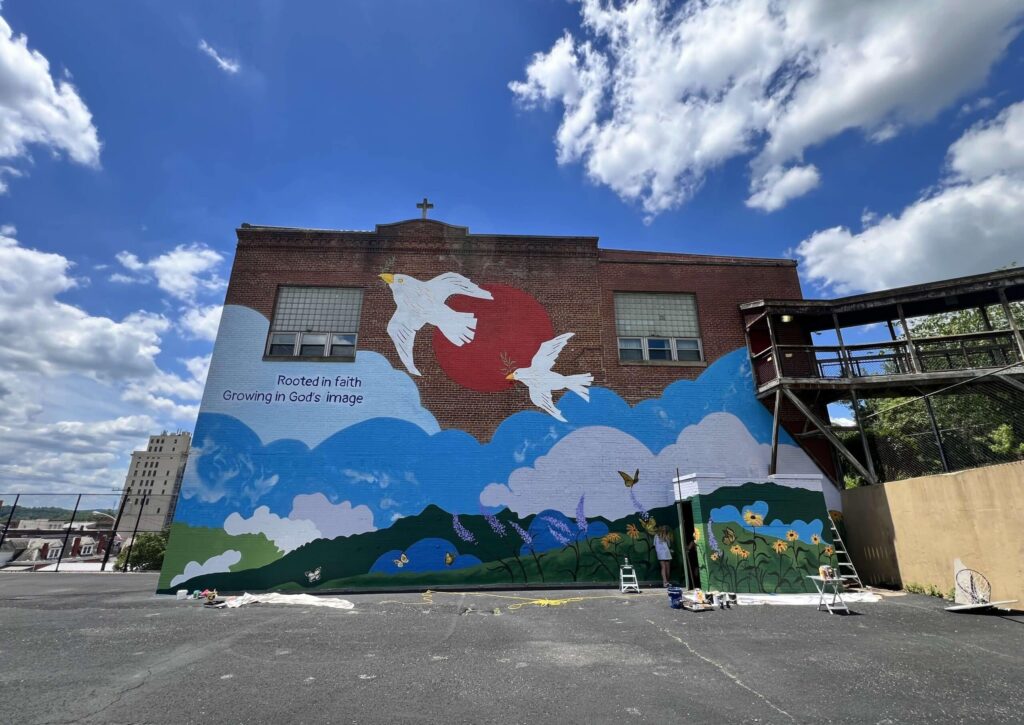
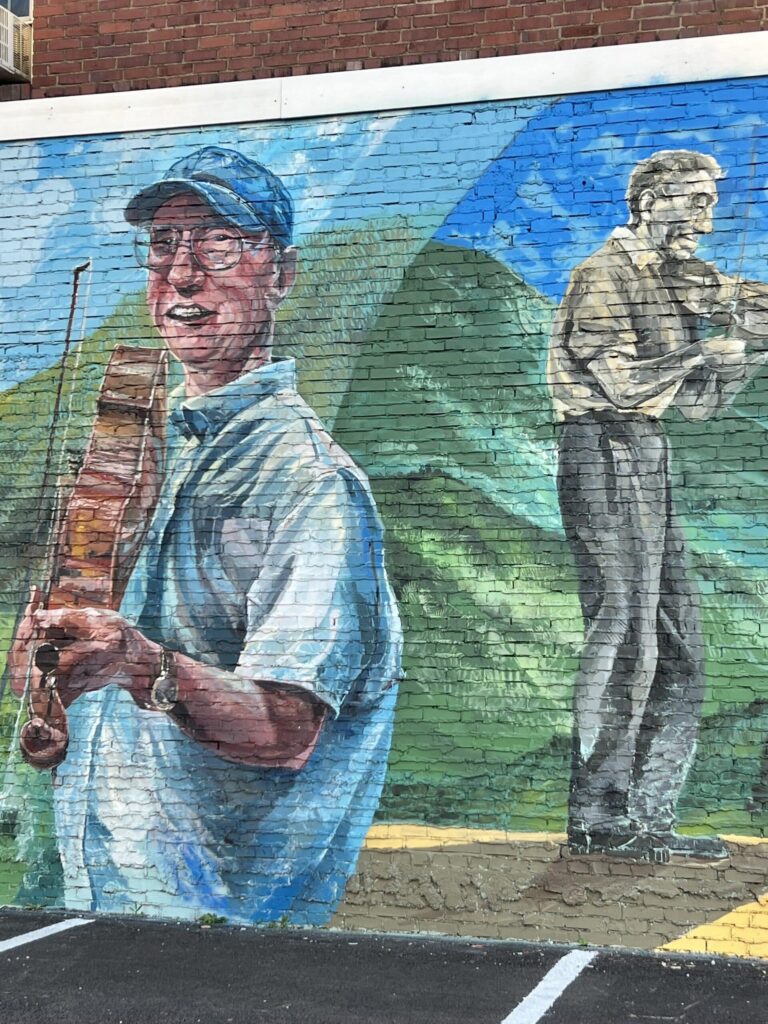
Photos courtesy of Joel Dugan.
