

At the heart of Appalachia is the struggle to control the narrative. There’s a fight to control our own story, to resist stereotypes and to embrace our cultures. This fight is apparent when marching in the streets, but we don’t often hear about the inner workings: the new vanguard of storytellers, fighting through art, journalism and grassroots community building. These are the stories we’re not seeing, but they’re the stories that will make up the future of Appalachia.
Leading this charge are artists like Wavy Wednesday, publishers like Crystal Good and community builders like Marie Cochran. Although they are but three of the many voices in this movement, they’re at the forefront of this struggle— specifically, the Affrilachian movement.
The term “Affrilachian” was coined in 1991 by Frank X. Walker, a founding member of the Affrilachian Poets. The term, made to acknowledge the voice of the Black experience in Appalachia (which, along with Appalachian identity, is not singular), challenges the common myth that there are no Black people in Appalachia, and further, that there are no Black artists in Appalachia.
THE DOMINANT NARRATIVE
In the collective American imagination, places are reduced to stereotypes. There is perhaps no region more persistently mythologized than our Appalachia. It’s what Chimamanda Ngozi Adichie would call “the single story” — specifically, the single story of catastrophe. On the national scale, J.D. Vance’s Hillbilly Elegy tore through America, presenting Appalachia as a monolithic and despairing white region. Whether you choose to see it or not, this narrative exists from the smallest scale all the way up to our Federal government. But we know that our region is “…far from monolithic…,” according to Appalachian writer Neema Avashia, and that “this dominant narrative has been used to vilify Appalachian people, to dehumanize them, and ultimately, to extract the resources from the regions without any accountability for that extraction.” That’s exactly the myth that these Affrilachian artists are trying to dismantle. By framing Appalachia as a problem to be solved and a people to be pitied, the narrative conveniently obscures the systems of physical and social extraction while suffocating internal complexity. And within this already flawed narrative, another profound erasure occurs: the denial of a Black presence. It’s a powerful and persistent falsehood that renders Black Appalachians invisible twice over, first as Americans and second as members of a region they seem to have been written out of.
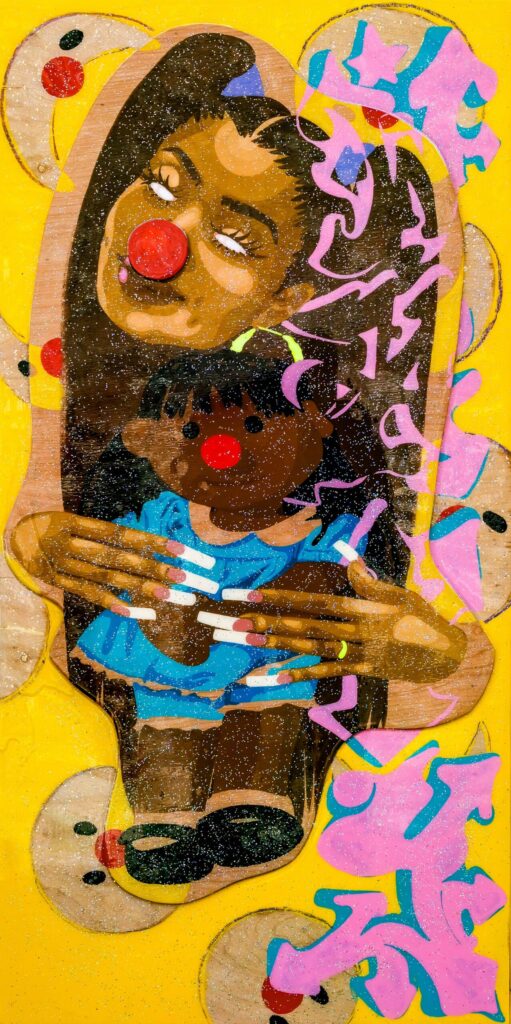
The result is a crippling double consciousness, a concept originally developed by W.E.B. Du Bois, that can be applied and specifically realized in Appalachia. It’s the burden of constantly having to prove your authenticity. To be “Black enough” but also to be “Appalachian enough” is especially a concern when dealing with urban-centric theories of Blackness. When your existence is being pulled between two different sides, when your worth as a member of a collective is a question mark, there’s a clear problem.
This struggle is inseparably tied to the land. As Fanon wrote in The Wretched of the Earth, “For a colonized people the most essential value, because the most concrete, is first and foremost the land: the land which will bring them bread and, above all, dignity.” The land itself becomes home, and without the land, the art and power behind the movement have to be authenticated. For Affrilachian artists, these hills are a source of sustenance and creative power — but claiming this land can require approval. Whether you’re a native or a transplant, the experience of claiming that you are kept by these mountains can be met with questioning. Especially if you don’t look like the majority, you often have to “prove” yourself.
Underneath it all is the perverse capitalist commodification of identity. In our consumer society, we define who we are and what experiences make up our identity by what we buy (or maybe, in today’s post-ownership age, subscribe to or rent).
American identity has moved much more generally towards the individual, to “self-everything,” instead of the community. Appalachia, on the other hand, has resisted that shift. The communal nature of our region is one of those perpetually defining ideals. Even though there’s no escape from self-obsession in today’s world, we’ve held ourselves a bit higher. Many Affrilachians are going even further, from communal organizations to interpersonal intimacy. No longer are we worried about being a part of the neighborhood club or the Junior League – instead, we are looking to develop valuable, intimate personal connections full of depth, especially with people who can share our lived experiences, including race and ethnicity and the generational legacies and traumas that arrive with those.
Even if we address all the previous problems, there’s at least one more: time. Beyond race and ethnicity, there’s a dominant myth about culture itself. Appalachia, to many, is fixed in time. “Appalachian culture” is not singular, and there’s more than just preserve preserve preserve. To many outsiders, the region is a museum exhibit. Our authenticity is measured by our level of distance from the “modern world.” But we can’t just preserve. If that’s all we do, then we’re stuck looking at the past, making what’s authentically Appalachian even smaller. And if we do that, then we stand to miss the new, deeply transformed and innovative stories that mark the unbelievably unique culture that is building in Appalachia as you read this — the things You’re Not Seeing. We’re not static, and we’re not stuck in the past.
There are so many who take Appalachia as a novelty, as something to be used for their own career or as a stepping stone. But there are those who are sincere, not opportunistic and contribute to the body of this region. Enter the Affrilachian Poets. Founded in 1991, they’re the oldest continuously running predominantly Black writing group in the U.S., still active at the University of Kentucky.
THE AFFRILACHIAN POETS
The Affrilachian Poets became one of the first groups for Black Appalachians to come together and create art. Challenging the dominant Appalachian narrative, the Poets formed a collective of sorts, one that would become a band of mutual support, a network and an intergenerational living archive. It was a deliberate act of cultural defiance. The Poets ensured that the Black Appalachian experience would be recorded in the present and passed on to the future. We at YNST have interviewed some of the next generation.
The Poets first came together as a full group at the 2011 “Symposium on Affrilachia: Celebrating the Artistic and Intellectual Contributions of African Americans to Appalachia,” hosted by the University of Kentucky. The group was recognized on the 20th anniversary of the Poets’ founding. They covered topics from the Prison Industrial Complex and the Grammy just won by the Chocolate Drops to a panel on Nina Simone. It was here that the need for a more structured vision became clear.
At the same time, Marie Cochran was invited to deliver the introductory presentation. Her work was received so well that she was soon asked to become the group’s curator. She travelled the country scoping out new artists, realizing the importance of her work of cultural pollination. The group had established its foothold, and now it was time to build a beautiful ecosystem. This work has continued. From 1991 to today, Black Appalachians are still building. People like Marie continue to create and inspire newer builders, like Wavy Wednesday and Crystal Good (Black by God, WV). They are the New Vanguard.
THE NEW VANGUARD
Wavy Wednesday (Kamara Townes) embodies the new, dynamic face of Affrilachian art. She’s a modern pop and Afrofuturist artist whose multimedia work is based around the experience of being a Black woman. Her path wasn’t exactly a straight line, though… It wasn’t until her last year of college that Wavy realized that being an artist could be a “serious” career, and she decided to go out on her own. She started out painting on store-bought canvases and was soon selected to be a mural artist for a beautification project in her hometown of Clairton, PA. But it wasn’t easy — Wavy learned on the job, trial by fire. Even further, she had to learn to build her art style as well as develop a way to bring her art to the world. Eventually, Wavy went to WVU for her MFA. She dealt with students and a white professor literally espousing white supremacist values in class, acting like it was normal. The theoretical erasure we discussed previously was now put in jarring reality in front of her. Wavy’s artistic journey was now a declared act of resistance. She told us that the short answer to it all is: “It’s more important now than ever to be loud about who you are.”
But through it all, moments of light shone through. Wavy told us about one studio visit with friend, mentor and artist, Atiya Jones. When she was pushing through the problems at WVU, Wavy met Atiya in the parking lot and was overcome with emotion, almost crying — seeing someone who looked like her, who rocked green nails and nose piercings — she was “the perfect representation of the type of women I make my art about,” Wavy said. “My art is a love letter to Black women.” This is the proof: there’s an urgent need for the networks that the Affrilachian movement builds.
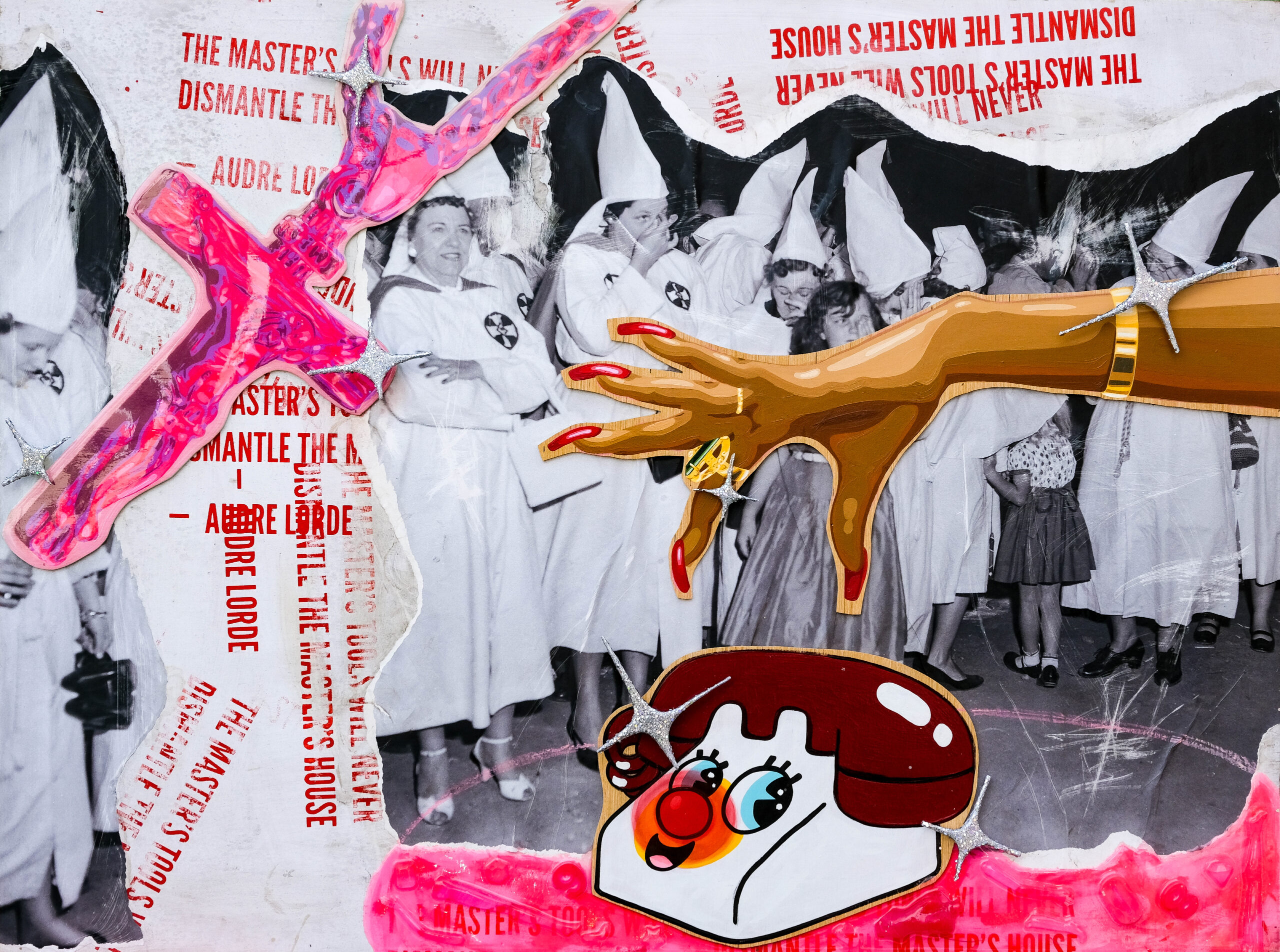
Wavy’s work speaks specifically to this desire, a need for something new. Her work has Afrofuturist influences, bringing the past and the future together in one piece. Wavy said that it’s about “changing your universe,” one that’s focused on a beautiful new future that’s “maximalist… more gaudy, more grand, more colorful.” It would be a sort of “timeless space,” one where Black people are equally “on the front lines,” and where there are more forward-looking Black stories than victim-oriented stories about “hardships,” where the world is a “more positive one.” It’s a radical reinvention of the world built on scrapping and learning from the past. If Wavy’s building the new world through art, Crystal Good is documenting the new world with truth and power.
Crystal Good is the founder of Black By God: The West Virginian, an online and print media organization centering Black voices from the Mountain State. We’re West by God, but Crystal took it one step further, claiming her place and claiming the places of Black folk who have come before her and will come after, using a fundamental resource: the news. “How about that?” she says with a smile, letting the weight of the statement settle.
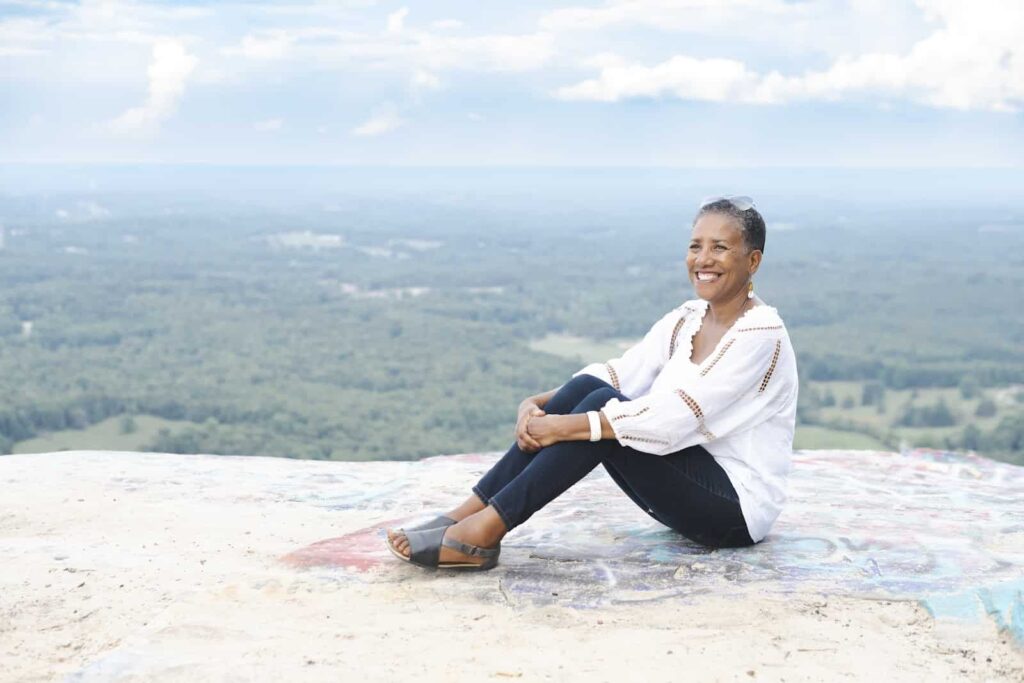
Crystal’s been on the scene since she was 16, when she tried to buy the last Black newspaper in WV, “The Beacon Digest,” which ceased publication in 2006. Even though today Crystal says she didn’t know “why [she] thought that [she] could buy a newspaper or know how to run it,” she held onto that dream — and in 2020, Black By God was founded. Crystal says that a lot of this came from loving to learn about Black history, not only because it “blows [up] the whole theory of White supremacy” but because there’s an “endless” amount of stories to tell about our home.
Black By God is “built on trust,” and in the modern world of AI and fake news, Crystal’s hoping to beat the challenge to truth. Crystal told us that when she needs a little inspiration, she checks on the Library of Congress and sees that Black newspapers have been in West Virginia since the late 1800s. She’s particularly inspired by the editor of a Black-owned newspaper, the West Virginia Digest, I.J.K. Wells, who in 1944 wrote this about Black news: “Because you fail to see it every week, don’t think it’s dead. The cause for which it stands cannot die, and because there is a need for a newspaper, this one or some other one will spring up from time to time.” She has faith and confidence that no matter what, the stories will continue to be told. It’s a promise from centuries past.
Black By God has grown from a news outlet into a modern “information highway.” Balancing both print and online media, Crystal is looking to build. She wants the nearly 60,000 Black folks in West Virginia to realize that there’s something for them, but more than that, something for everybody. It might be a Black newspaper, but those stories represent “the whole and the beauty and the presence of West Virginia.” Everyone’s lives should be reflected with dignity and accuracy. As Crystal spoke to me, she was meeting a group of Black women founders in North Carolina, a testament to the foundation of the “creative community” she’s been building. Her solution lies in mutual support and relentlessness: “We need a lot less pity and a lot more ‘yes ma’am,’” she said. And this support finds its architect in Marie Cochran.
Marie is a cultural pollinator. Her work, from acclaimed visual art in Harlem, Atlanta and the Smithsonian, to her foundational role in the Affrilachian Artists Project, is focused on building the infrastructure to make the Affrilachian movement sustainable. She spoke about how there’s a strategy to undermine the infrastructure, the bonding and bridging, of minority groups – and how the most powerful movements are the ones creating future leaders. But to do that, you need empathy. And as Marie said, “empathy is at the heart of the arts. ‘Nuff said.”
Marie recalls the immense amount of work to get things started: she drove from state to state to connect artists through sheer willpower. But now, in the age of shortened attention spans and screen-filled worlds, how do you create and maintain a community across multiple states? Marie compared it to a garden: you’ve got to water the plants, yes, but you also need to pick the weeds and focus on the individuals. Sometimes you don’t have a great harvest, but you keep going year after year. Marie isn’t going to be stopped so easily. She believes (and I do too) that this is a movement, legitimately a cultural movement like the Harlem Renaissance. The challenge, now that it’s been started, is how to keep it going. Her goal while working with each artist is to develop a permanent exhibit or archive of sorts.
And there are other people working to achieve that dream. Black Appalachia: Race, Place, and Identity, published by the University of Kentucky Press, has its anticipated release on September 8th, 2026. There is an upcoming reboot in the works for the pioneering book Blacks in Appalachia, the first comprehensive presentation of the Black experience in Appalachia, edited by Black Appalachian scholars William H. Turner and Edward J. Cabbell. And of course, look out for a new essay from Marie, coming soon! There are more works that I have not mentioned, and I recommend you start your own search online.
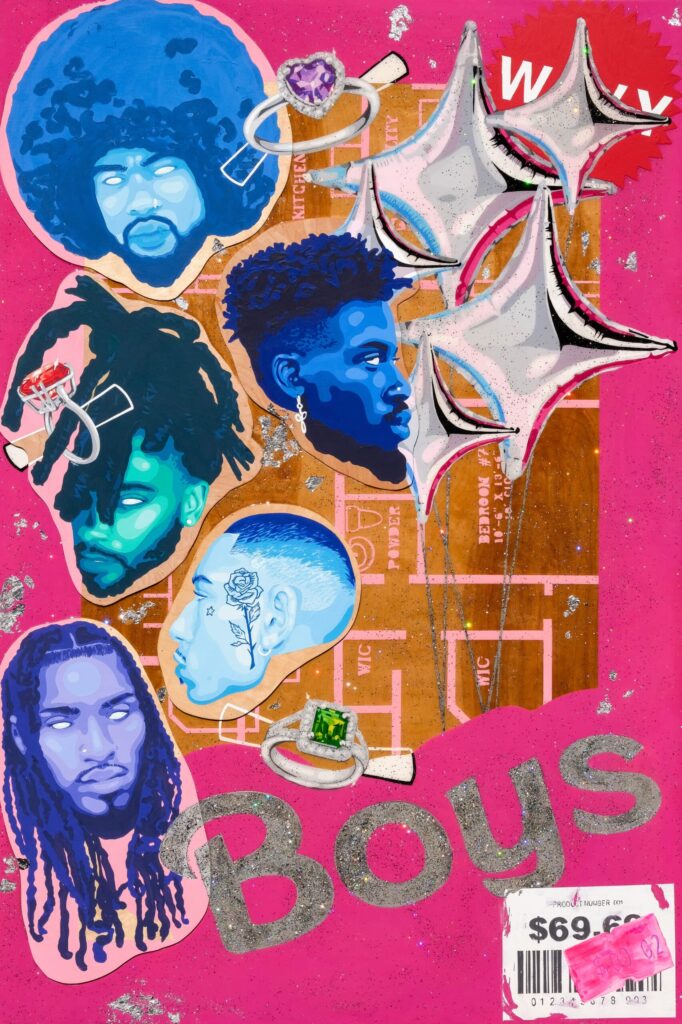
But Marie resists easy answers. She requires that we “continue to ask the question… don’t assume it’s going to take care of itself.” Marie’s ready to keep fighting. “The awards are all trivial… it’s really about sustainability… reverberation… building longevity.” The Affrilachian voice should speak, but more importantly, it should echo for generations.
THE STRUGGLE CONTINUES
There’s no point in talking about all of this if we aren’t taking action. Each of our features in this article is taking action, whether it’s by newspaper, art, community-building or all three. But the key to starting is boots-on-the-ground grassroots work. We need daily deliberate action.
In today’s world, digital spaces can offer a virtual connection — but more than likely, you’re being thrown into the capitalist hellscape algorithm octopus. You’re not going to find your needs met there, you’ll simply condense your multi-faceted self into a sellable profile. Home is in these hills — the true and intimate connections between people, the shared creation and mentorship. The future of the movement and of greater Appalachia depends on a radical change – living face to face. We will continue to build intergenerational connections, and in many ways, a living archive. How many of us have had a problem and had it easily solved by our loved ones, parents or grandparents? Without them, each generation would be starting from zero, trying to find their way from the beginning. With the power of inherited, eternal truths, and if we have an archive, a beautiful foundation, then we have a much stronger chance of surviving and building upwards. The Affrilachian story gets glossed over, likely not mentioned at all in history books. To face our contemporary problems, we’re going to have to rely on our community.
So much of this work is being done in academia and government organizations, but in 2025, federal funding and DEI control is trying to stop us. There are targeted attacks to dismantle the institutional support systems that provide support for our marginalized artists. But our response can’t be to give up. Although we may not be able to stop certain leaders in their tracks, we can build ourselves. We can take this work out of the ivory tower and into the local community center, onto the porches of our neighbors and friends.
And finally, the movement must answer the perpetual problem of Black art: since the Black Arts Movement (BAM) and before, it has been argued that Black art should not be its own category, that Black art is simply American art, or even simpler: art. There is the ever-present risk of “ghettoizing” artists, but I believe championing Affrilachian identity will help to integrate Affrilachian work and stories into the broader Appalachian narrative. I believe asserting a distinct identity this powerful will make the mainstream narrative expand to include it. In doing so, we avoid self-segregation, forcing a broader recognition of the reality of Appalachia.
Each of my interviews has proven to me the positive and future-oriented outlook of the movement. Each of our three featured artists is too busy to be paralyzed by the difficulties we’ve discussed. The Affrilachian movement will continue to grow in strength and notoriety – and you can be a part of it. This is an open invitation. To learn more, contact Marie Cochran and the Affrilachian Artists Project at affrilachiastudio.com. The door is open.
