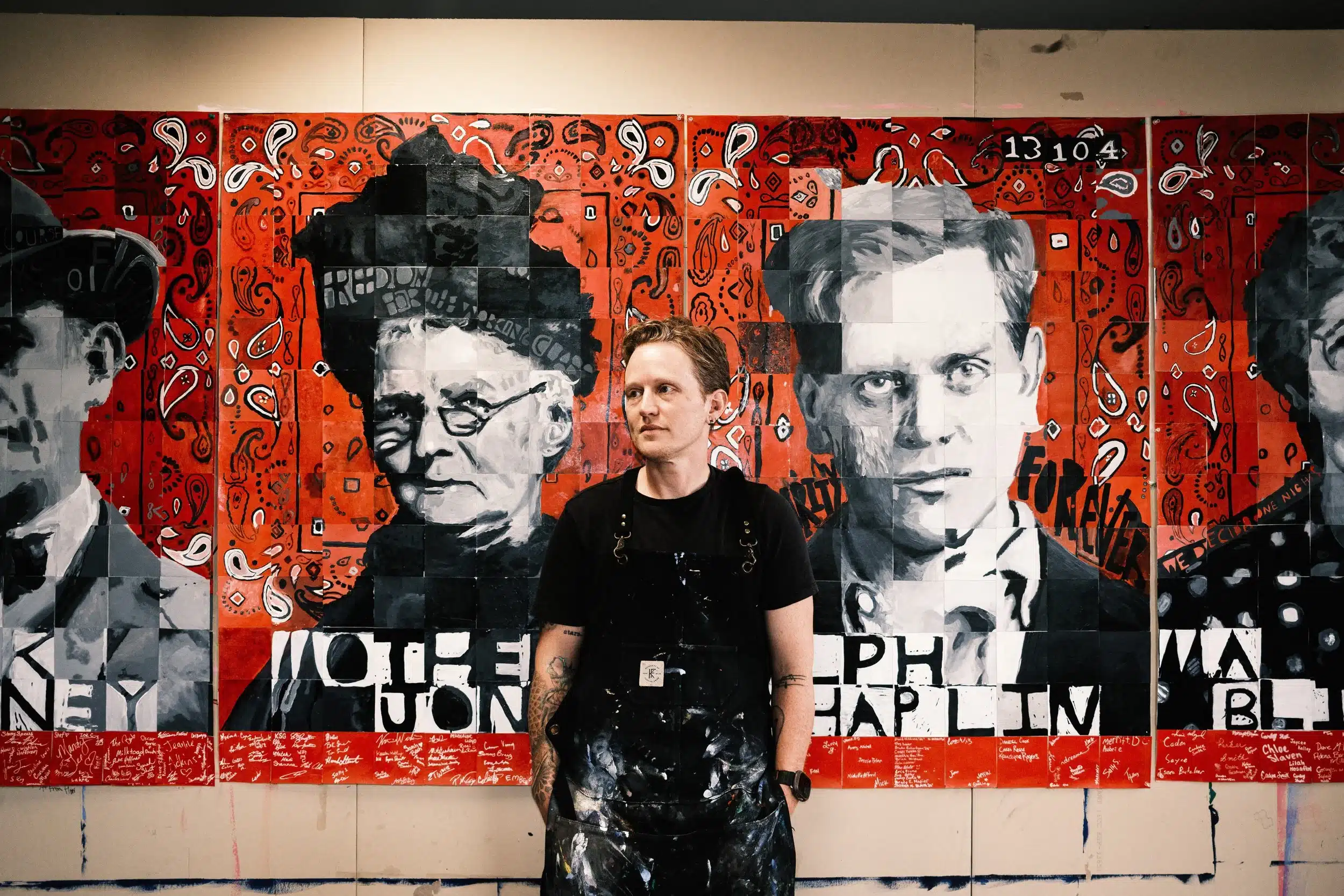

When artist Sassa Wilkes invites self-proclaimed non-artists to participate in his mural, the first thing people usually say is no, mentioning that they can’t even draw a stick figure.
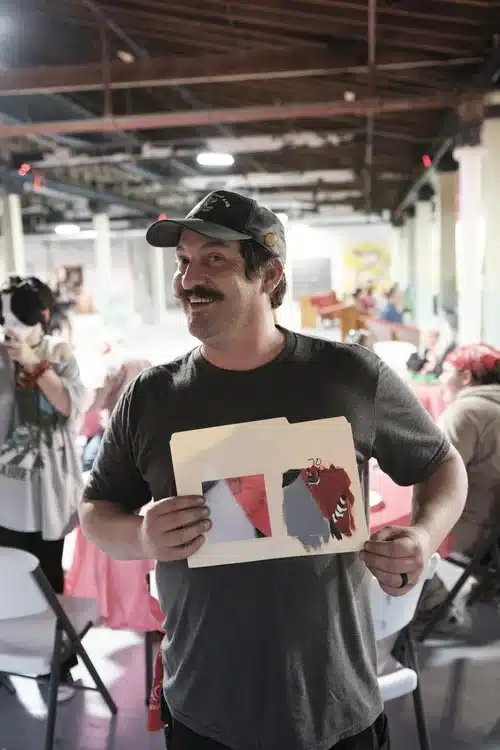
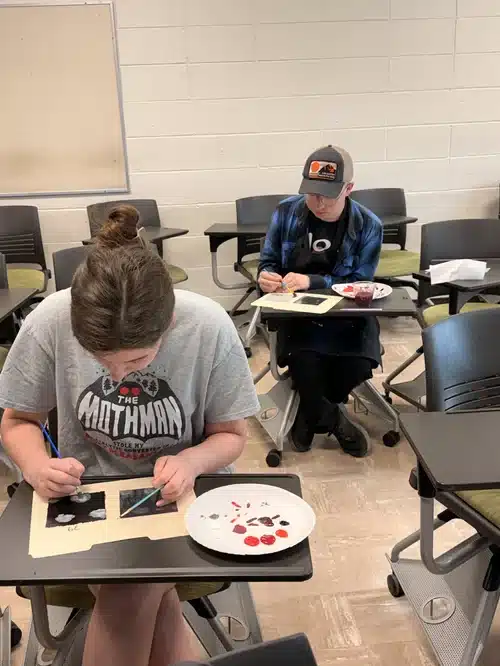
He’s heard it countless times. He smiles anyway, hands them a 4-inch square and invites them to paint. That tiny square eventually becomes a part of a larger portrait created by more than 1,000 West Virginians.
“My favorite thing is watching people step back after they put their piece into the portrait,” he said. You can see how it interacts with everybody else’s pieces. It’s like, ‘Oh, those tiny little things, those tiny imperfections that I was worried about, I can’t see them at all.’”
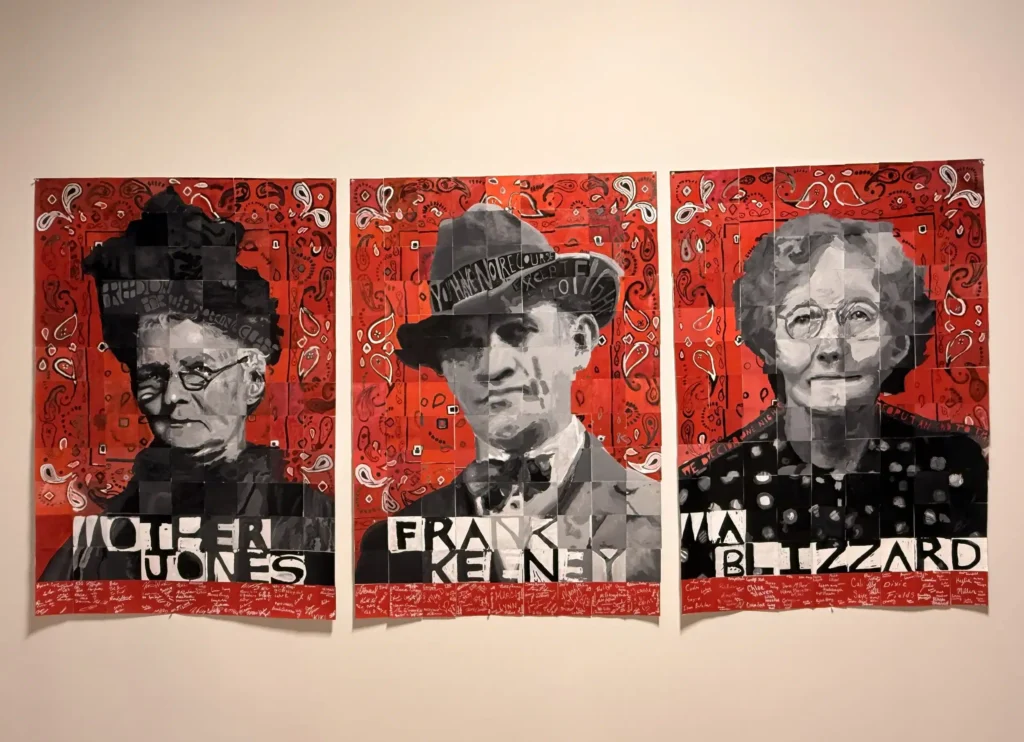
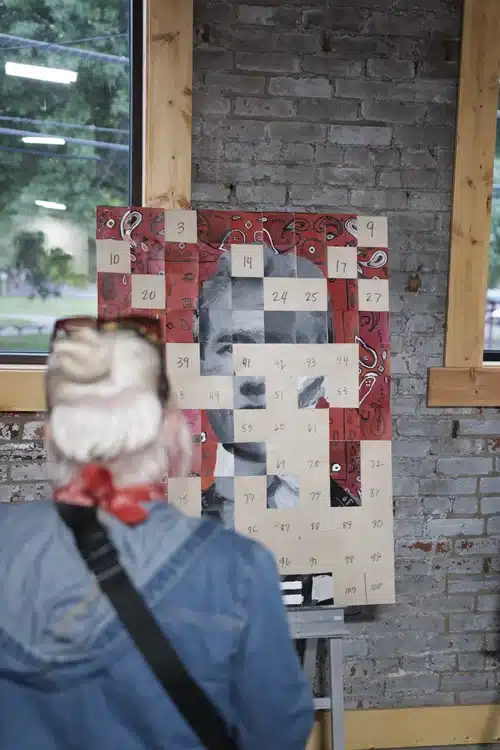
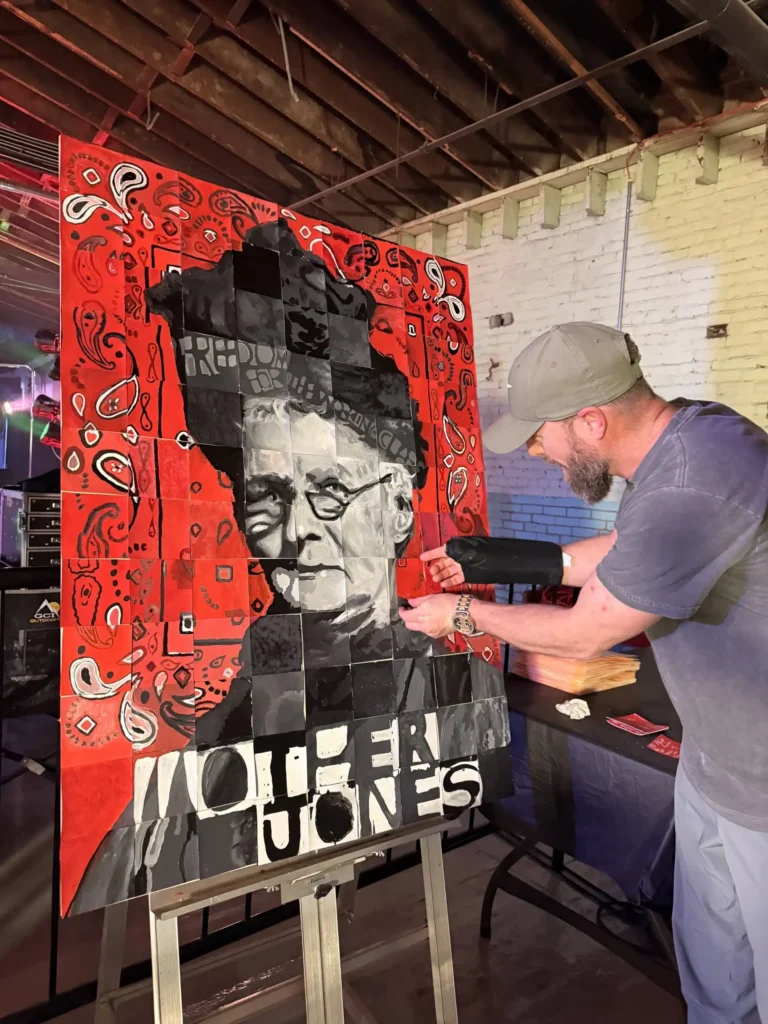
That simple realization has become the foundation of “SOLIDARITY,” Sassa’s collaborative mural project at West Edge Factory in Huntington, WV. When complete, the mural will stretch more than 100 feet long, telling the story of the West Virginia Mine Wars through 12 large portraits.
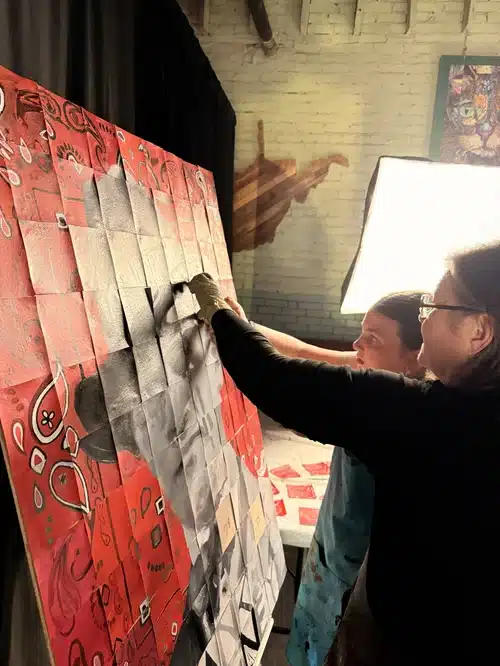
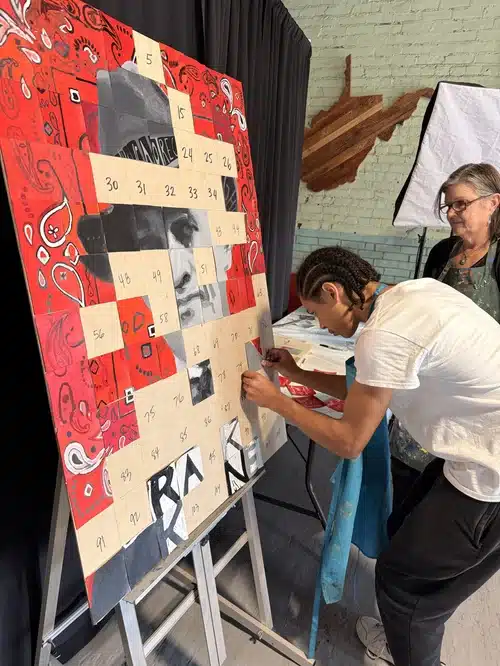
Unlike a traditional mural, “SOLIDARITY” is being created piece by piece. Each portrait is divided into 108 four-inch squares, with every square painted by a different person before being assembled into a single image using Poytab mural fabric.
Participants have contributed at West Edge Factory’s monthly First Saturday Market, the West Virginia Mine Wars Museum, the Huntington Children’s Museum, Lavalette Elementary School, Marshall University and other community events throughout the state. Between the portraits, colorful panels created in response to prompts about Appalachian life are arranged into a red bandana pattern.
“The red bandana was used to identify the miners in the war; it was a visual representation of their solidarity,” Sassa said. “It started as a symbol of a multi-racial unionized group, and I truly think that type of solidarity is the only thing that’s going to get us out of what we’re in right now. That kind of across-race, across-gender, across-class solidarity.”
For Sassa, the project began with a visit to the West Virginia Mine Wars Museum on Labor Day a few years ago, where he realized he knew nothing about the conflict.
The experience became personal as he recognized names and places connected to his own family. His mother grew up in Paint Creek; he spent time there each summer and generations of his relatives worked in the coal mines.
“It’s ridiculous that I don’t know about it because my family history there is so strong, and it’s ridiculous as a West Virginia public school student that I was not taught about this, which was completely intentional,” Sassa said.
Rather than learning about the history alone, Sassa wanted to create a project that invited others to learn alongside him.
“I feel like a lifelong learner,” Sassa said. “I don’t think you have to be an expert to be a teacher of something; you just have to know a little bit and be really interested in it, and then you can learn alongside other people.”
The title, “SOLIDARITY,” is meant to reach far beyond the labor history of the event.
“What really struck me when I first learned about the West Virginia Mine Wars was the fact that it was a multiracial, unified movement,” Sassa said. “These workers found a point of connection and one thing they could agree on.”
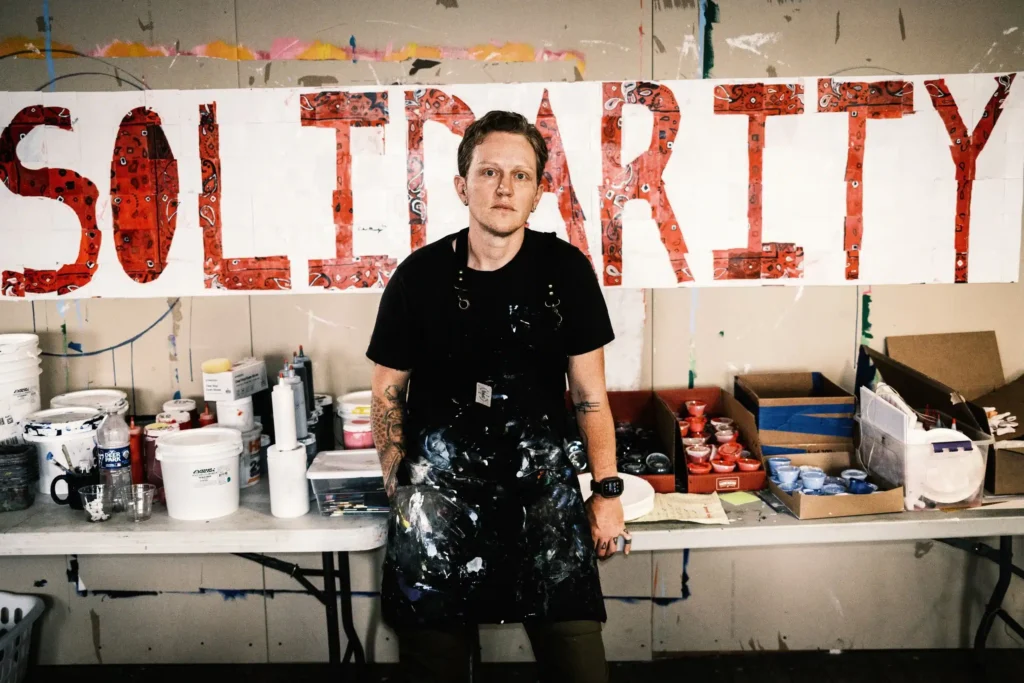
He sees that same spirit reflected every time strangers gather around the tables to paint.
“So many people are afraid of making an imperfect contribution,” he said. “I think it proves that even just sitting down for a few minutes and doing one small thing in a large group can make a big difference, and it doesn’t have to be perfect.”
The project also reflects the mission of West Edge Factory, a former manufacturing facility transformed by Coalfield Development into a creative hub for artists, entrepreneurs and workforce development. Sassa serves as director of Recreate Appalachia, Coalfield’s creative placemaking program, making West Edge the natural home for a project centered around community.
“I didn’t come up with this idea separately and then decide to find a home for it,” he said. “It was very organic that it was just the perfect space for that.”
The completed mural will be unveiled during a May Day celebration on May 1, 2027, at West Edge Factory.
Until then, Sassa will continue inviting anyone willing to pick up a paintbrush, regardless of artistic experience, to contribute to the piece.
“There’s a lot of different types of people in our community, and that’s cool,” he said. “So to create a project that invites every single person, regardless of who they are, where they come from or what their beliefs are, to contribute to something that illuminates a part of our labor history that was denied to us growing up, is a beautiful thing.”
Photos courtesy of Sassa Wilkes’ website
